


How to preserve family stories can feel like a large task, but it does not require a perfect archive, expensive equipment or a relative who remembers every date. Begin with one conversation and one detail worth keeping: the sound of a familiar phrase, the first meal someone learned to cook, or the place where a family tradition began. Small memories often become the parts future generations treasure most.

Why family stories are worth preserving
Family history is more than a list of names and dates. It carries the choices, humour, hopes and everyday habits that shaped a family. A recipe may hold the memory of a crowded kitchen. A photograph may bring back a journey nobody thought to write down. A grandparent’s expression can explain a family saying better than any dictionary.
When these details stay only in conversation, they can become difficult to recover. Recording family history gives relatives a way to listen again, compare memories and pass meaningful details forward. The goal is not to create a flawless record. It is to keep a sincere account that can grow as more people contribute.
Start with one person and one small conversation
Choose someone who is comfortable talking and ask what kind of conversation feels right. A walk, a cup of tea or a call may feel easier than sitting down for a formal interview. Set aside twenty minutes, explain how you hope to use the recording or notes, and make it clear that they can skip any question.
Begin with a particular memory rather than a broad request such as “Tell me your whole life.” Specific prompts help people picture a moment and add the details that make it vivid. These family history interview questions can also help you prepare questions to ask grandparents:
- What did an ordinary day look like when you were young?
- Which place from your childhood can you still picture clearly?
- Who taught you a skill or tradition you still use?
- What food reminds you of home, and who made it?
- What family expression or story do you hope people remember?
- Was there a small decision that changed the direction of your life?

Listen for the details behind the answer
When someone mentions a place, a person or an object, pause before moving to the next question. Ask what they remember seeing, hearing or feeling. “What happened next?” and “Who else was there?” invite a fuller memory without putting words in the speaker’s mouth. If a date is uncertain, note that it is an estimate rather than turning a guess into a fact.
Let the speaker set the pace. Some memories are joyful; others may be private or painful. Do not press for a story they do not want to tell. A respectful boundary is part of preserving a family’s history well.
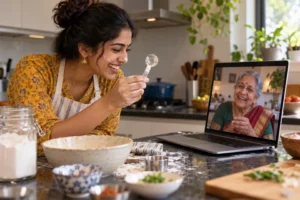
Record family history clearly and with permission
A phone voice memo is often enough. Before pressing record, ask permission and explain who will hear it. If recording feels uncomfortable, take notes and read them back at the end so the speaker can correct them. Save the file with a useful name that includes the person’s name, the topic and the date.
Keep a simple backup in a second place, such as a computer and a trusted cloud folder. Add a short note identifying people in old photographs, approximate locations and any details you are not certain about. If you plan to publish the material, check names, permissions and privacy with the people involved first.

Turn a recording into something your family can revisit
You do not have to transcribe every word. Start with a short introduction: who is speaking, when the conversation happened and what it is about. Then choose a few vivid moments and preserve the speaker’s wording where it matters. Keep a copy of the original audio even if you later edit the written version.
For photographs, write names, places and approximate years while someone can still help identify them. For a recipe, record who taught it, when it was made and the small changes that make it theirs. Add captions and context so a future reader does not have to guess why the image or object matters.

A simple seven-day plan for preserving family stories
- Day one: Choose one person and ask if they would like to share a memory.
- Day two: Pick a topic, such as a first home, a family meal or a childhood friend.
- Day three: Write five open questions and choose a quiet time to talk.
- Day four: Have the conversation. Listen more than you speak.
- Day five: Save the recording or notes with a clear file name and a backup.
- Day six: Ask the speaker to review names, dates and any detail they want kept private.
- Day seven: Share the approved story with relatives who will value it, and invite them to add their own memory.
This plan is deliberately small. One well-kept story is a meaningful beginning, and it gives the next conversation somewhere to start.
Frequently asked questions
How do I preserve family stories if I live far away?
Use a phone or video call, or invite the person to send a short voice note. Ask one question at a time and keep the original recording safely backed up.
What should I ask grandparents about their life?
Ask about ordinary days, favourite places, family traditions, friendships and lessons they learned. Specific prompts are easier to answer than a request to recount an entire life.
Do I need special equipment to record family history?
No. A phone recording or careful written notes are enough to begin. Clear sound, permission and a reliable backup matter more than professional equipment.
How can I protect sensitive memories?
Ask before recording or sharing, respect requests to pause or keep something private, and let the speaker review the final version.
Family stories become easier to keep when someone takes the first gentle step. Explore more ideas in Parents & Grandparents and Memory Keeping & Journaling. For a story-led example of how one small object can open a memory, read She began her life story with a broken cup.


