

Parents & Grandparents · Original fiction
A blue biscuit tin reveals the words a quiet mother could never say aloud.
The tin on the top shelf
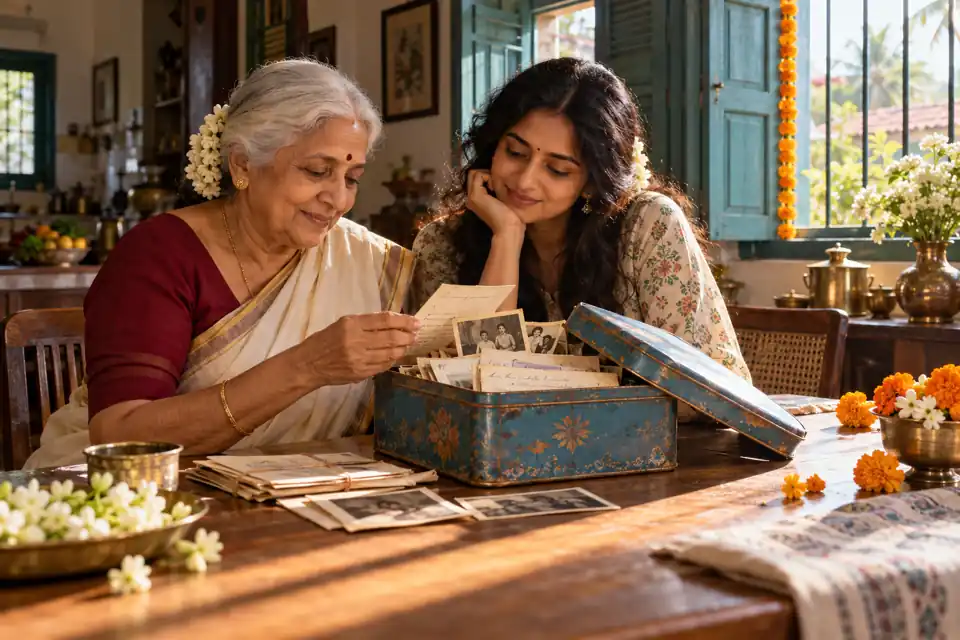
Meera had come home to help her mother clear the kitchen. She expected cracked cups, forgotten lids and the usual argument about keeping empty jars. Instead, she found a blue biscuit tin on the highest shelf. Inside were envelopes bearing her name. None had stamps. Her mother reached for the tin, then let her hands fall.
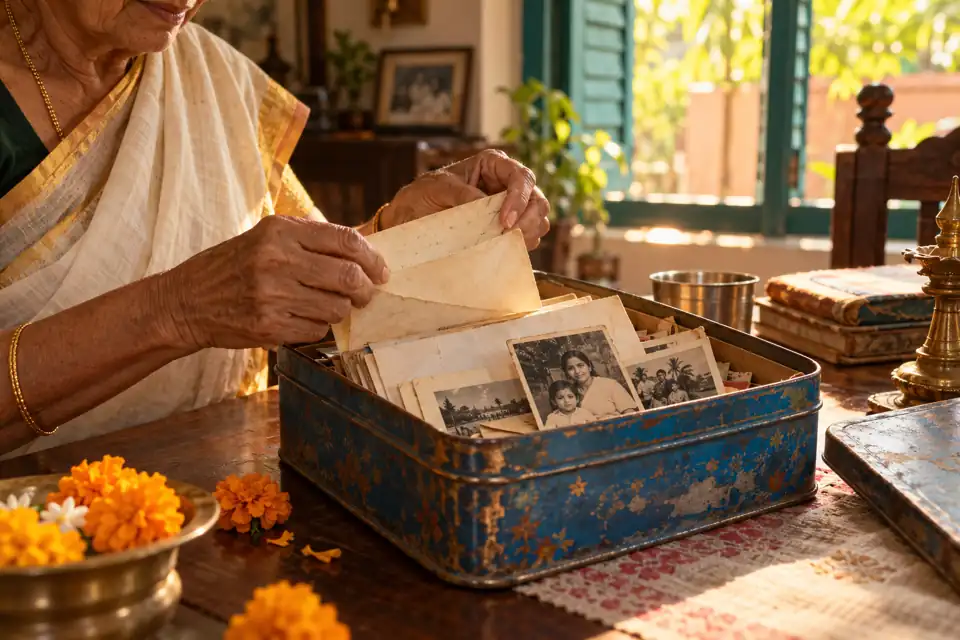
Meera had already made two piles on the floor, one for things to keep and another for things her mother would quietly rescue later. The tin was heavier than she expected. Beneath its lid lay a piece of faded red cloth, folded around the envelopes to protect them from the damp. She recognised her mother’s careful handwriting immediately. As a child, she had watched those same fingers label exercise books and sign school forms. Now they were twisting the edge of a dish towel. Meera asked whether she could read one. Her mother nodded without meeting her eyes. Outside, a vegetable seller called down the street. The pressure cooker hissed in the neighbouring house. The afternoon continued with its familiar noises while Meera realised she had found a part of her mother’s life that had existed beside her own without ever entering it.
A life between the lines
The first letter was dated the week Meera left for college. Her mother had written about the bus journey home after dropping her off, and how she had accidentally cooked rice for three. Another described a promotion Meera had mentioned in a hurried phone call. A third began with an apology for asking whether she had eaten when what she really meant was whether she was happy. Meera sat down. For years, she had mistaken those questions for a shortage of things to say.
Some envelopes contained only a few lines. Others held pages covered on both sides, the margins filling with thoughts that had arrived after the ending. In one, her mother described buying a new sari and putting it back because she could not decide whether the colour suited her. In another, she admitted that a wedding invitation had made her miss a friend who had moved away. These were not simply letters about a daughter. They were evidence of a woman with private disappointments, vanities, jokes and unfinished wishes. Meera felt embarrassed by how surprising that seemed. She had asked her mother about medicines, electricity bills and appointments. She had rarely asked what she looked forward to. When she reached a letter about a song on the radio, she read the opening twice, trying to imagine the younger woman her mother had remembered while listening to it.

Why they stayed
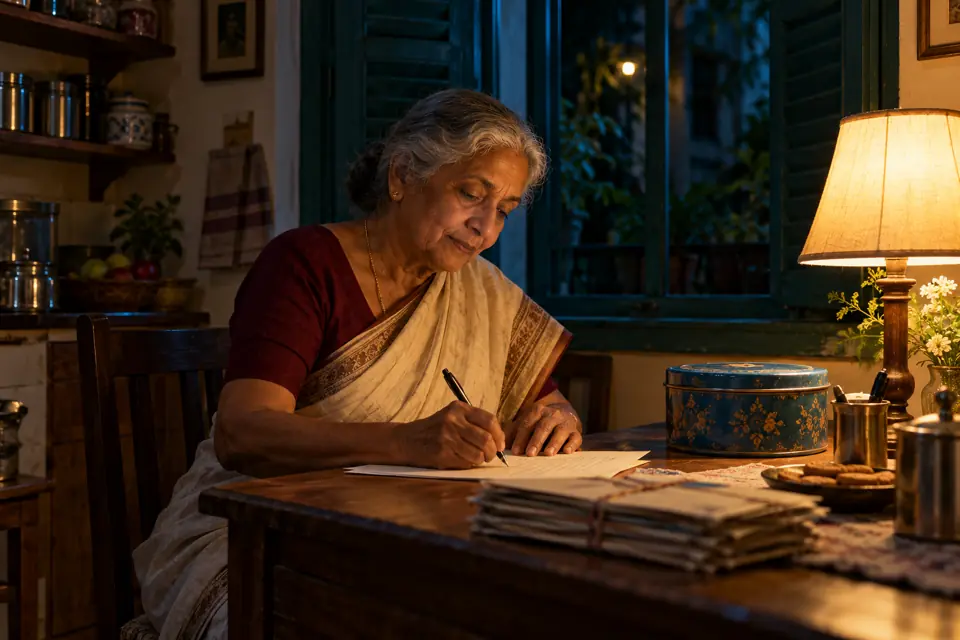
Her mother explained that she wrote when the house became too quiet. By morning, each letter felt foolish. Why burden a busy daughter with the details of a small day? Meera wanted to protest, but she remembered all the calls she had answered while opening another email. She remembered saying, Nothing new here, before her mother had finished. She placed the letters back carefully. Then she asked about one detail: the jasmine plant mentioned in the oldest envelope.
Meera asked why her mother had not simply said these things on the telephone. Her mother shrugged. There was always something more immediate to discuss. The water motor needed fixing. A cousin was visiting. Meera sounded tired. Then, after a pause, she added that she sometimes needed time to find the right words. On paper, nobody hurried her towards a conclusion. Meera recognised a habit in herself: filling every silence with a solution. If her mother mentioned loneliness, she recommended a television programme or offered to book a visit. She had thought usefulness was the same as listening. Looking at the envelopes, she understood that her mother had not always wanted an answer. Sometimes she had wanted company inside a thought. Meera turned her phone face down on the table. She did not promise to become perfect. She asked whether they could make tea before the next letter.
An afternoon without hurry
They talked until the kitchen darkened. Her mother told her how the plant had nearly died, how a neighbour had helped, and how she still picked its flowers before breakfast. Nothing extraordinary happened. No lost years returned. But the next Sunday, Meera called with a notebook beside her. She asked one question and waited through the silence. What was your first home like? Her mother laughed. This time, she had somewhere to begin.
At first, her mother answered the question about her childhood home in facts: three rooms, a courtyard, a well shared with another family. Meera nearly moved on. Instead, she asked which room was coolest in summer. That brought back a stone floor, a cousin who cheated at board games and an aunt who could tell when mangoes were ripe without touching them. Her mother began correcting herself, laughing at the order in which events returned. Meera wrote down a few phrases only after asking permission. She did not want the notebook to become another task her mother had to complete properly. When the call ended, she had three untidy pages and no clear chronology. She also had an image of her mother sleeping on a terrace beneath a mosquito net, counting distant train whistles before she knew what cities those trains might reach.

A memory to keep
The tin remained on the shelf, but it no longer held only unsent letters. Mother and daughter began adding short notes after their calls. Neither tried to make them beautiful. They wrote down what they had finally heard.
A month later, Meera brought her own envelope home. Inside was a letter describing a difficult week at work and the relief of hearing her mother’s voice on Sunday. She had nearly left out the difficult part. The old instinct was to keep the conversation light, to protect each other by remaining partly unknown. This time, she let the truth stay. Her mother read slowly, then asked a question instead of offering advice. The exchange did not remove the distance between their homes or undo every hurried call. It gave them a gentler way to cross it. Before leaving, Meera took a photograph of the blue tin, but she asked to keep only one original letter. Her mother chose the shortest. It described an uneventful morning, the jasmine opening, and a daughter missed without being summoned. Meera carried it home between the pages of her notebook.

An original fictional story created for eautobiography Journal. Characters and events are imagined.


