

Writing Your Autobiography · Original fiction
When a blank first page feels too large, one familiar object offers a way in.
The first sentence
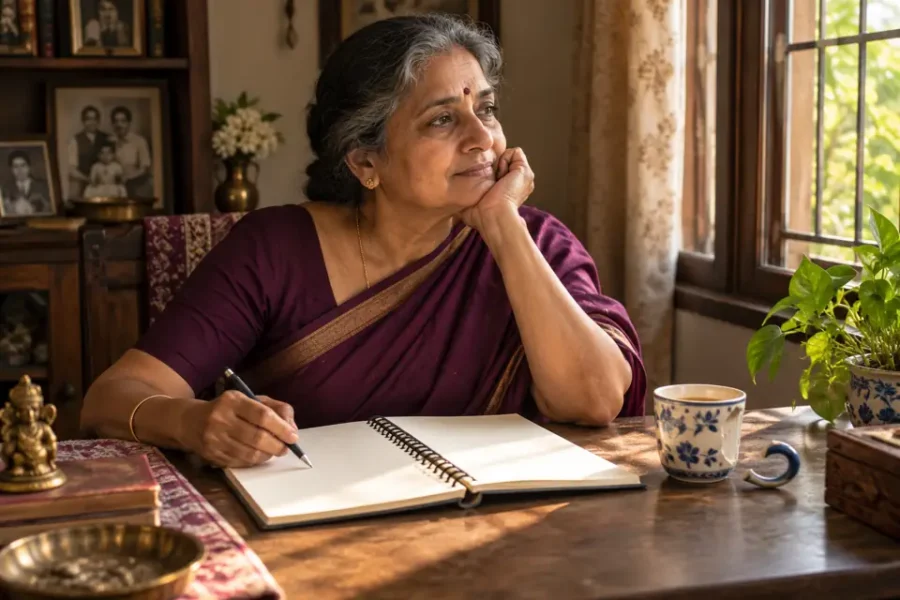
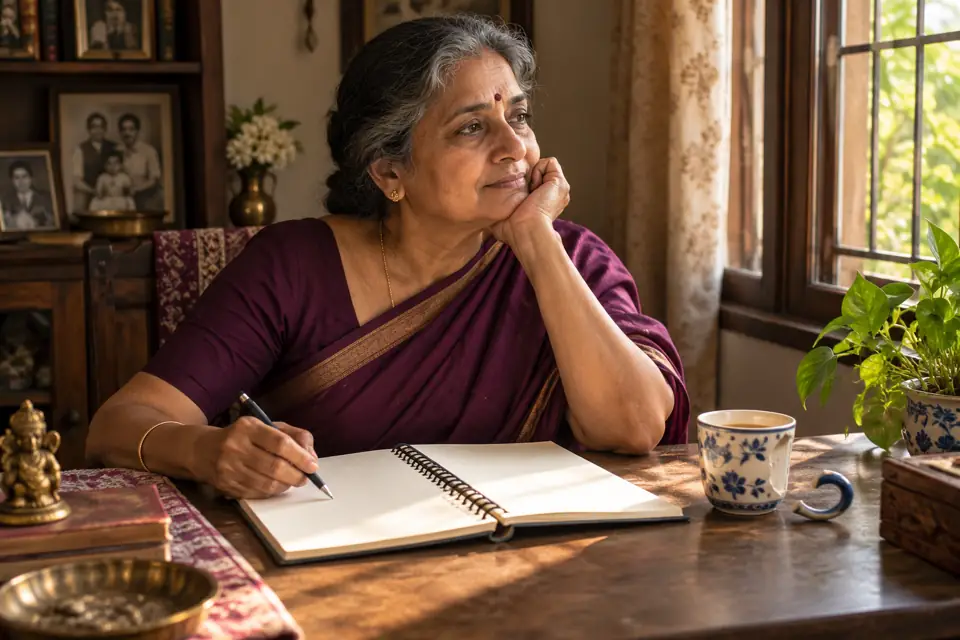
Saroja wanted to write her autobiography and could not get past the year she was born. Each opening sounded like a school form. She tried listing her achievements, then crossed them out because the list said little about the person who had lived through them. At the kitchen table, her grandson asked about a chipped cup she refused to throw away.
She had been collecting advice about how a life story ought to begin. One article recommended a dramatic event. Another suggested a family tree. A friend said chronology was safest because it prevented confusion. Saroja followed each suggestion for an afternoon and ended with several beginnings that sounded like introductions to somebody else’s life. Her grandson arrived while she was rearranging the pages into another order. He had come to help move a table, not to become an interviewer. The cup caught his attention because it held a different selection of pencils every time he visited. He asked where the handle had gone. Saroja answered without looking at her notes. Within a minute, she was describing a bus conductor arguing about luggage. The young woman in that memory had a destination, a worry and a small amount of money. Unlike the blank first page, she had somewhere to go.
An easier beginning
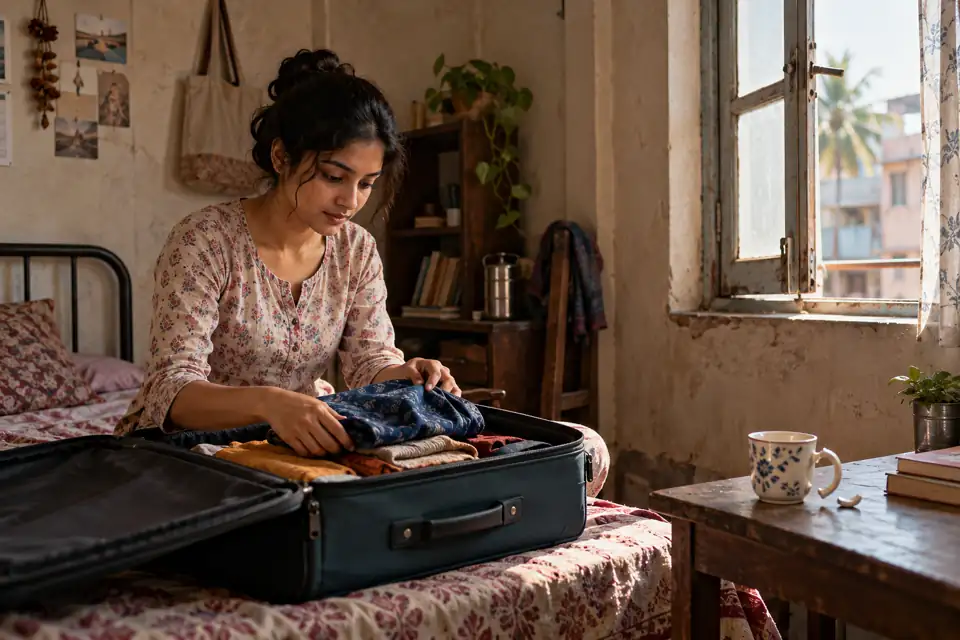
The cup had come from a roadside stall during her first journey alone. She had been nineteen, travelling to start work in a town where she knew nobody. The tea seller had wrapped the cup badly, and its handle broke before she arrived. She kept it because buying it was the first unnecessary decision she had made without asking anyone’s permission.
The journey had not been heroic. Her aunt met her at the stop, and the job was arranged through someone the family knew. Saroja insisted on those details because, while she was proud of going, she did not want independence to erase the people who had helped. The cup had cost more than she intended to spend. She remembered holding it through the stall window and imagining it on a shelf in a room she had not yet seen. When the handle broke, she was embarrassed enough to hide the damage until she reached her aunt’s house. Her aunt examined it and said it could hold something besides tea. The practical remark had comforted her more than sympathy. Saroja had arrived with an imperfect object and a fear of being exposed as unprepared. Nobody demanded that she turn either into a success story before being allowed to stay.

A scene instead of a summary
Her grandson said she should write that. Saroja described the crowded bus, the coins in her palm and the room she rented with a window that would not close. She did not explain her entire childhood before reaching the scene. Details arrived as she needed them. One page led to another: the first wage, a letter home, the friend who taught her which market stall would not overcharge.
As she wrote the rented room, she remembered a smell of damp wood and the sound of a bicycle bell outside before dawn. She could not remember the colour of the curtains. Earlier, that gap would have stopped her. Now she left a note to ask her aunt’s daughter and continued with the part she could recall clearly: counting her first wages on the edge of the bed. Her grandson read the pages only after she invited him. He wanted to know what she ate during her first week. The question seemed unimportant until she remembered a neighbour bringing food in a steel container and returning later for the empty vessel. That neighbour had become a friend. A detail about dinner opened a relationship she might otherwise have summarised in a single sentence. Saroja began keeping questions in the margin. She did not have to answer all of them before the writing could move forward.
Leaving room for uncertainty
When she could not remember a year, she wrote that she was unsure. When her sister remembered an argument differently, she kept both accounts in her notes. The story became more honest as she stopped demanding perfect recall from it. She also decided some experiences were hers to keep private. Writing a life did not require surrendering every part of it.
Her sister’s version of the argument arrived over a long telephone call. They agreed about who was present and disagreed about almost everything said. At first, Saroja defended her account as if the project required a winner. Then she heard how much the incident still mattered to her sister. She wrote down the difference, clearly identifying whose memory was whose. The decision relieved her. A personal account could be honest about its viewpoint without claiming to contain every viewpoint. She also removed a passage that revealed something another relative had told her in confidence. The omission did not make her story false. It marked a boundary she wanted to respect. Before sharing a chapter, she considered who else appeared in it and whether any detail needed checking or permission. Those pauses slowed the work, but they made it easier to continue without feeling that writing required taking ownership of everyone around her.

The beginning she chose
She eventually returned to her birth year, but it was no longer the first sentence. Her opening described a broken handle and a young woman learning to travel alone. The cup sat beside her notebook, holding pencils. It had been useful for years in a way nobody intended. So had the memories she once believed were too small to write.
By the time she returned to the first page, she had several chapters and a folder of unanswered questions. The broken cup appeared only briefly in the final account, yet it had changed how she approached the whole project. She no longer tried to sound important before describing what had mattered to her. Her grandson asked whether the story would be finished by her next birthday. She said perhaps, then laughed at the ambition. A life did not stop happening while somebody wrote about it. She planned to share the chapters she was comfortable sharing and leave space for later additions. That evening, she sharpened a pencil over a folded newspaper and placed it back in the cup. On the next clean page, she wrote the name of the neighbour who had brought dinner. The story continued through the people who had made an unfamiliar room feel possible, one ordinary kindness at a time.

An original fictional story created for eautobiography Journal. Characters and events are imagined.