

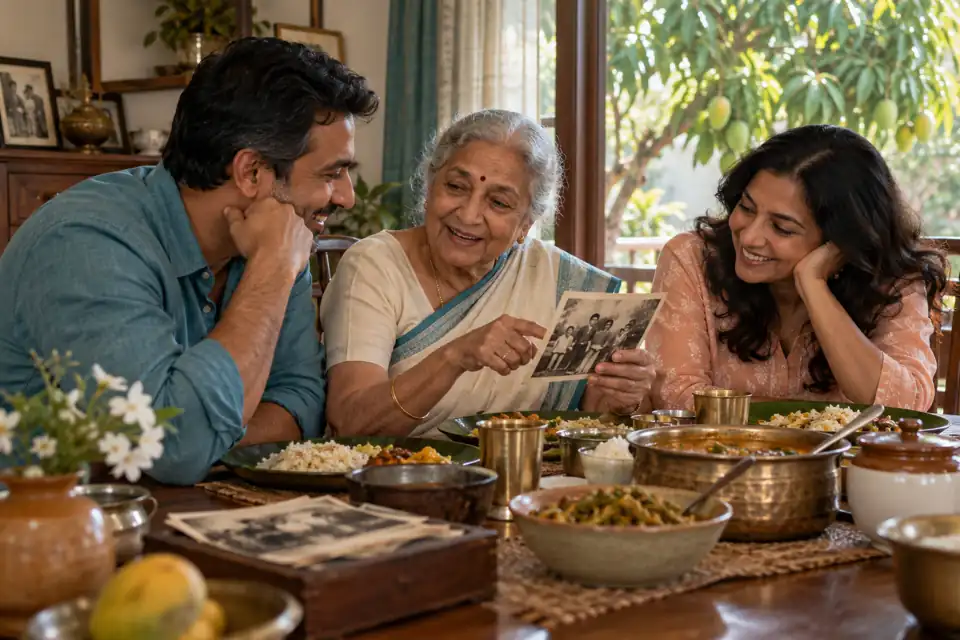
The best questions to ask parents about their childhood sound like an invitation, not an interview. A familiar question about a house, a meal, or a school day can open the door to a family story that has never been written down. You do not need to ask everything at once. Choose one question, listen without rushing to the next, and let your parent decide which details they want to share.
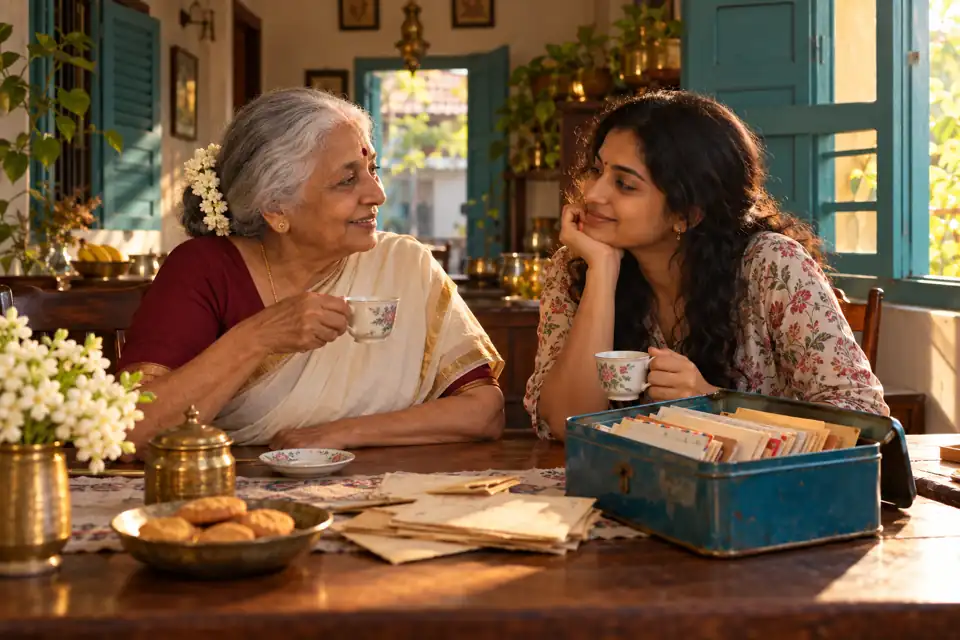
These prompts can help you preserve childhood memories, build a family history, and gather material for a memoir or autobiography. The purpose is connection. If a subject feels painful or private, move on and return only if your parent chooses.
Start with an easy invitation
Begin with a broad question that lets your parent choose where the story starts. Try, “What was a normal day like when you were young?” Then follow the answer instead of reading from a long list. A pause is useful; people often need time to picture a place or remember a name.
You might ask: “What did you call home?” “Who lived with you?” “What did you do after school?” “Which neighbor or relative visited often?” Questions about ordinary routines can bring back details that a big question such as “Tell me your life story” may miss.
Ask about home, place, and everyday life
Places hold memories. Invite your parent to describe the home, street, village, or town where they grew up. Ask what they could see from a window, how the rooms were used, where people gathered, and what sounds were part of the day. If the family moved, ask what felt different in the new place.
Useful questions include: “Which room did you spend the most time in?” “Was there a place nearby where you liked to go?” “What was the weather like during the season you remember best?” “What did the kitchen smell like?” Sensory details help a reader imagine the scene, but record only what your parent actually remembers.
Explore family traditions, food, and language
Traditions can explain how a family expressed care, faith, celebration, or belonging. Ask which holidays mattered, what people cooked for special occasions, what languages were spoken at home, and which sayings or songs everyone knew. A recipe may lead to a story about who taught it, how ingredients were found, or why a dish appeared at a particular gathering.
Try asking: “What did your family do on weekends?” “Was there a meal everyone looked forward to?” “Which family custom do you still keep?” “What did elders teach you about being a good neighbor?” These questions can preserve family history across generations without assuming every relative experienced the same tradition in the same way.
Remember school, friends, and growing up
School memories often reveal the personality of a young person. Ask what subjects came easily, which teacher they remember, how they travelled to school, and what happened during breaks. Ask about friends, games, books, chores, and the responsibilities they had at home. Avoid assuming childhood was carefree; some parents carried adult responsibilities early.
Gentle prompts include: “What were you proud of learning?” “Who made you laugh?” “What did you do when you had free time?” “Was there a rule you found difficult?” “What did you hope to do when you were older?” Their answers may show how opportunities, expectations, and family circumstances shaped the choices that followed.
Ask about work, change, and turning points
When your parent is comfortable, ask about the first job they held, the first important decision they made, or a time when their plans changed. Rather than asking for a dramatic moment, invite a specific scene: “Where were you when you heard the news?” “Who was with you?” “What did you decide to do next?” The story may be joyful, difficult, or mixed.
Other questions to ask parents about their childhood and early adulthood include: “What responsibility taught you the most?” “Was there a person who encouraged you?” “What did you have to learn the hard way?” “Which choice would you make again?” Let them define what counts as a turning point. Their meaning may be different from the one you expect.
Use follow-up questions that keep the story clear
Good follow-ups help a memory become understandable without putting words in someone’s mouth. Ask, “What happened just before that?” “What do you remember seeing?” “How did you feel at the time?” “What do you think about it now?” Separate what your parent remembers firsthand from what they heard later. If dates or names are uncertain, note that gently rather than correcting them in the middle of a story.
When two relatives recall the same event differently, keep both accounts. Family history can hold different points of view. A letter, photograph, school record, or recipe card may help establish context, but it cannot confirm every feeling or conversation. Label what is known, what is remembered, and what remains unclear. This honesty makes a memoir more trustworthy.
Make the conversation comfortable and respectful
Before recording, ask permission and explain how you hope to use the conversation. Some parents may prefer notes; others may want the recorder turned off. Offer breaks, keep the setting familiar, and let your parent skip any question. Do not press for painful details simply because they might make a dramatic chapter.
Afterwards, thank them and ask whether they want to add, correct, or keep any part private. Store recordings and notes safely. If a story includes other people, consider how identifying details might affect them before sharing it publicly. Preserving a life story should respect the storyteller as well as the reader.
Turn answers into a lasting family story
Choose one answer and write a short scene in your parent’s words. Begin with the place, add one or two concrete details, and include what the moment meant to them. Keep a separate note for names, dates, and follow-up questions. Over time, several conversations can become a portrait of a childhood, a family, and the values passed between generations.
You can return to these questions whenever another memory comes to mind. Start with one conversation this week, then preserve the notes with care. For more ways to shape a life story, explore our autobiography and memoir writing resources.


