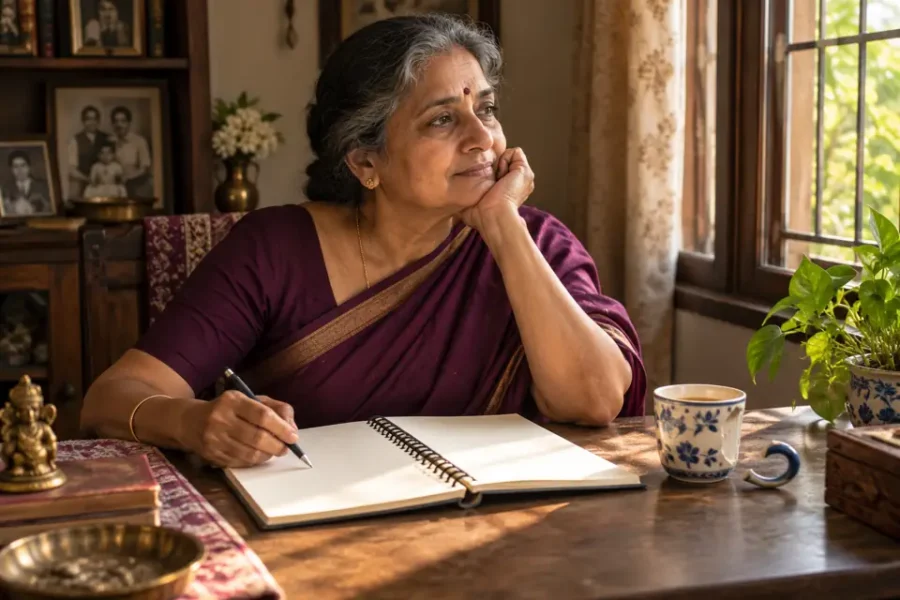


How to start writing your autobiography is a question many people ask when life feels ordinary. Begin with the life you actually lived—not the life you think sounds impressive. A morning routine, a long bus ride, a room you shared or a phrase someone repeated can hold the meaning of an entire season. You do not need a dramatic opening. You need one honest moment you can still see clearly.

You do not need an extraordinary life to write a life story
Many people delay an autobiography because they believe it should cover every year or include a remarkable achievement. A personal life story can be valuable for a different reason: it shows how a person understood home, work, change, family and hope from the inside. Ordinary scenes give readers a way to recognize the human meaning beneath the milestones.
Instead of asking, “Is my life interesting enough?” try asking, “What do I want someone I love to understand about the way I lived?” That question helps you choose a purpose. You might want to preserve family memories, explain a turning point, pass on values, or make sense of a chapter that still matters to you.
Choose a moment, not a birth-to-now summary
A timeline is useful for organizing, but it can be a difficult first page. Start with a scene that has a clear setting: the kitchen where you learned something, a first day at work, a journey, a friendship, a goodbye or a moment when your plans changed. The scene does not have to be dramatic. It should be specific enough that you can describe it.
Make a quick memory map with three columns: places, people and objects. Add whatever comes to mind without sorting it. A school bag, a neighbour’s gate, a train ticket or a handwritten note can lead you toward a memory with a beginning and an end.
Make the memory visible with concrete details
Once you choose a moment, write what happened as if you were guiding a reader through it. Where were you? Who else was there? What could you hear or smell? What did you notice first? These details help a reader enter the scene, while your reflection explains why it stayed with you.
Try this simple pattern:
- Place: Describe the room, street or landscape.
- Action: Say what you were doing and what changed.
- Feeling: Name what you understood then, or what you felt but could not say.
- Meaning: Explain what you understand now.
Do not force a lesson into every paragraph. Sometimes a scene matters because it shows a relationship, a habit or a version of yourself you can now see more clearly.
Use autobiography writing prompts when the page feels blank
Autobiography writing prompts are useful when you want a starting point without being told what your story must mean. Choose one question, set a timer for ten minutes and write without editing:
- What did a normal evening look like in one home you remember?
- Which person made you feel understood at an important time?
- What did you believe about your future at age fifteen, twenty-five or forty?
- Which small responsibility changed how you saw yourself?
- What is a sound, smell or taste that takes you back to a particular place?
- What would you like a younger family member to know about a difficult season?
If a prompt feels too personal, skip it. You can also write around the memory first: describe the place, the object or what happened just before it. You may find the central moment later.

Build a flexible autobiography outline
An autobiography outline does not need to be a complete table of contents. Use a few anchor points to keep your writing from feeling scattered. You could organize the story by time, by place, by relationships or around a handful of turning points. A themed structure may work better than a strict chronology if certain ideas connect different years.
Write a short heading for each possible chapter, then add one sentence about the memory you might include. Move the headings around until the sequence feels natural. Leave gaps where you are uncertain; a draft is allowed to have questions in it.

Write honestly while respecting privacy
Your autobiography belongs to you, but it may include other people’s lives. Focus on what you remember, distinguish memory from verified fact and avoid presenting assumptions as certainty. When a passage involves someone else’s private experience, consider asking permission, changing identifying details where appropriate, or describing your own feelings without exposing theirs.
Honesty does not require sharing every detail with every reader. Decide what is private, what is for family and what you are comfortable making public. You can keep a complete personal draft and prepare a separate version for publication.
Make a writing habit small enough to keep
Set a twenty-minute appointment two or three times a week. Start with one memory and stop when the timer ends, even if the paragraph is unfinished. Add a note about what you might write next so you can return without having to find your place again.
- Choose one prompt or scene.
- Write freely for ten to fifteen minutes.
- Underline one detail you want to keep.
- Write a note about the next question to explore.
After a few sessions, group related scenes and look for a natural order. Editing comes later. In the first draft, your job is to gather the pieces of your story, not to make every sentence final.
Frequently asked questions
How do I start writing my autobiography?
Choose one vivid memory, decide who you are writing for, and draft a short scene. You can build a timeline or outline after you have some material.
What should I include in an autobiography?
Include the people, places, choices and ordinary routines that help readers understand how your life took shape. You do not have to record every event.
Can I write an autobiography if I am not a professional writer?
Yes. Start in your natural voice. Clear memories and honest reflection matter more than polished language in the first draft.
How long should an autobiography be?
There is no required length. A family keepsake may be a handful of chapters; a book-length memoir may follow a more detailed structure. Let your purpose and material guide the scope.
One page is enough to begin. For more guidance, explore Writing Your Autobiography and Memory Keeping & Journaling. You can also read The notebook of ordinary Tuesdays for another story built from everyday details.