


Love & Relationships · Original fiction
After years of practical conversations, a small act of attention changes what a couple hears.
Rain at the bus stop
When Kavya left her umbrella on the bus, she told her husband as if reporting a household expense. It was old anyway, she said. He nodded while searching for his keys. Their conversations had become efficient: groceries, bills, the leaking tap. They were kind to each other, but kindness sometimes travelled through their home without being noticed.
The umbrella had travelled with Kavya through three houses and several changes of job. One of its spokes resisted opening, and she knew exactly how to coax it into place without catching her fingers. Losing it irritated her more than she admitted. That evening, she stood over a saucepan and described the crowded bus while Dev listened from the doorway. He asked which route she had taken. She assumed he was deciding whether the purchase of a replacement could wait until the weekend. Their practical language had grown over years of real obligations. It was not empty or unloving. Bills did need paying; somebody did have to remember the plumber. Still, she missed being asked about something that did not need fixing. When he left the kitchen, she wondered whether he had heard her disappointment or only the price of another umbrella.

An unexpected detour
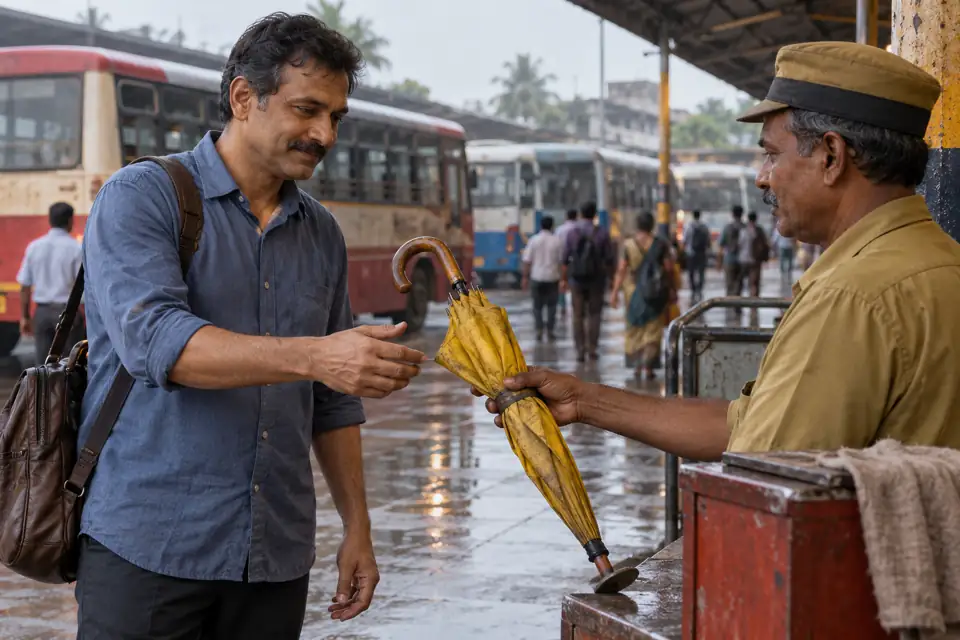
The next evening, Dev arrived late carrying the umbrella. He had called the bus depot, described its bent handle and taken a different route home to collect it. Kavya stared at the small tear near its edge. Why go to so much trouble for this? He looked embarrassed. She had bought it on their first trip together, he said. He remembered her choosing yellow because she wanted to find him easily in a crowd.
Dev had not intended the recovery to become a grand gesture. During his lunch break, he called the depot expecting a quick refusal. A clerk asked for a description and told him to try again after the evening buses returned. He considered leaving it there. The depot was across town, and Kavya might reasonably think the journey absurd. Then he remembered a station platform and a yellow circle moving through a sea of dark umbrellas. He had been frightened they would lose each other in the crowd. She had lifted her arm and made him laugh. The memory had never become one of the stories they told at gatherings. It belonged to an untidy hour between the photographs. When he collected the umbrella, the clerk asked whether it was valuable. Dev looked at the bent handle and said it depended on how you counted.
The story inside an object
She had forgotten saying that. She had not forgotten the trip: a missed train, wet shoes and two people eating oranges on a station bench. Yet she had assumed the memory belonged mostly to her. Over dinner, they compared what they remembered. His favourite moment was not the sunset she had photographed. It was the way she offered half her tea to a stranger whose train had been delayed.
Kavya set the umbrella against the kitchen wall and forgot the food for a moment. She had assumed Dev remembered their trip through the photographs she kept sending to family groups: the hotel balcony, a crowded market, a sunlit hill. He remembered her stubborn insistence that they walk the wrong way because she could hear a train. She remembered his attempt to buy tickets in a language neither of them spoke. They disagreed over which of them lost the room key, then discovered they had both been quietly taking responsibility for it. The conversation did not produce a perfect shared version of the journey. It revealed two versions that had been travelling together. Kavya fetched an old album from the cupboard. Dev recognised a restaurant by its doorway, although the photograph showed only a wall. Suddenly, they had more to ask than either of them could answer in one evening.

Learning to ask again
They did not become a different couple overnight. The tap still leaked. They still argued about which cupboard held the spare bulbs. But on Fridays, they began asking a question that could not be answered with a shopping list. What made you laugh this week? What did you worry about and not tell me? Sometimes the answers were short. Sometimes they led back twenty years.
Their new questions felt awkward at first. On the first Friday, Dev said the funniest thing that had happened was a printer jamming during an important meeting. Kavya laughed politely, then admitted she had hoped for something more revealing. He told her she could not ask for ordinary life and reject it when it sounded ordinary. They laughed properly at that. The next week, she described a conversation with an old friend that had left her feeling unexpectedly behind. He resisted the impulse to reassure her immediately. She asked why he had been staying late at work. He explained a worry he had been dismissing as too small to mention. They learned that a question was only the opening. The harder part was allowing an answer to arrive without turning it into an argument, a lesson or a task to complete before bedtime.

A little more attention
Kavya repaired the umbrella instead of replacing it. The patch was visible, and she liked that. It reminded her that love was sometimes a grand decision, but often it was a detour nobody had asked someone to take. The following week, when Dev mentioned a song from his childhood, she wrote its name down.
One evening, they took the umbrella out together when the rain began halfway through a walk. It was too small to shelter them both properly. Dev’s shoulder became wet, and Kavya complained that he was holding it at an angle. The exchange sounded so much like their younger selves that they stopped and smiled. Neither wanted to pretend their relationship had been rescued by an object. It had been sustained by thousands of practical acts, including the ones they were tired of discussing. The umbrella simply helped them notice a different kind of attention among those acts. Later, Kavya wrote the story of the station bench on the back of a spare photograph. She left room underneath for Dev’s version. He began with the oranges, correcting the number she thought they had bought. She let the disagreement remain. A shared life, she thought, could hold more than one faithful account.

An original fictional story created for eautobiography Journal. Characters and events are imagined.


