

Resilience & New Beginnings · Original fiction
A woman begins with one slow lap and discovers a reason to return.
The box by the door
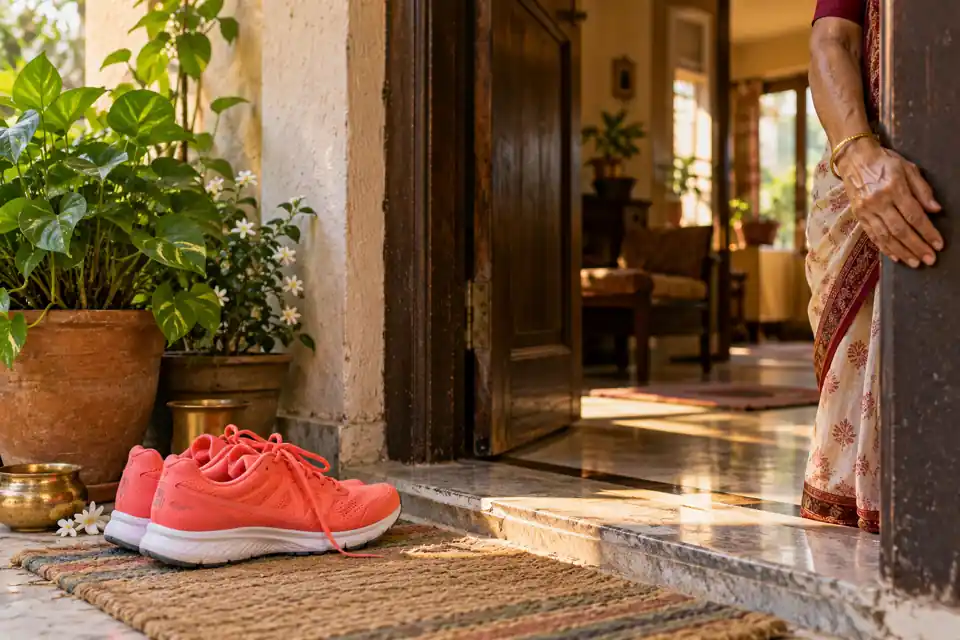
On her sixtieth birthday, Latha bought shoes brighter than anything in her cupboard. She placed them by the door and avoided looking at them for three days. She had imagined a brisk new version of herself. The real version still preferred another cup of tea and worried that people at the park would laugh.
The shop assistant had asked whether Latha wanted something suitable for walking. She had answered yes, then felt obliged to explain that she was not an athlete. He had smiled and brought several boxes without appearing disappointed. The shoes she chose were green with a narrow orange stripe. At home, she opened the box as if it contained a promise she had made too publicly. Her children sent enthusiastic messages. A neighbour suggested a distance she could work towards. Their encouragement made her oddly reluctant to begin. She had wanted to make a small private decision, and already it seemed to require a result worth reporting. On the third evening, she placed the shoes outside the box and put the lid away. The next morning, she decided, she would only walk to the gate. Anything beyond it could be decided later.
One ordinary lap
On Thursday, she went anyway. She did not run. She walked to the first bench, sat down and watched an older man carefully stretch beside a tree. A young mother pushed a stroller past her twice. Nobody paid much attention to Latha’s shoes. On the way home, she felt disappointed by how little she had done. Then she realised she had left the house for something that belonged only to her.
The first bench was barely a few minutes from the entrance. Latha could still see the gate through the trees. She felt foolish sitting there with shoes so clean they seemed to announce a false ambition. Then the older man beside the tree asked whether she knew the time. He thanked her and continued his stretches. That was the whole encounter. It relieved her more than encouragement might have done. The park did not require her to explain herself. Before leaving, she walked once around the small flower bed. A gardener was gathering fallen leaves with a broom made of stiff twigs. She noticed a pink flower caught in the bristles and remembered watching her mother sweep a courtyard in the same unhurried way. On the journey home, she bought milk and carried it herself, pleased by the simple continuity between an unfamiliar beginning and an ordinary errand.

An interrupted beginning
Some mornings she returned; others she did not. A family visit interrupted the routine. Rain interrupted it again. Previously, she would have called that failure and put the shoes away. This time, a woman she had met at the park waved from the gate. We missed you, she said. The sentence was so simple that Latha nearly cried. Someone had noticed her absence without needing her to organise anything.
The woman at the gate introduced herself as Nalini. She had noticed Latha because of the bright shoes, then remembered her face. Latha almost offered a long explanation for the missed days. Nalini interrupted only to ask whether she preferred the shaded path or the one near the pond. The choice was practical and merciful. They walked slowly enough to talk about daughters, electricity cuts and a television serial neither wished to admit watching. Nalini sometimes arrived late. Once, she did not come for a week. When she returned, Latha asked which path she wanted rather than demanding an account. The friendship grew through that courtesy. They could notice an absence without treating it as a failure of discipline. For Latha, who had spent years apologising whenever she could not meet somebody’s expectation, that was an unfamiliar kind of company.
A different measure
They began walking together. Latha still moved slowly. She stopped comparing herself with the runners and started noticing the flowering tree, the tea seller opening his stall and the way her friend remembered everyone’s name. She wrote the mornings in a calendar, leaving the missed days blank instead of crossing them out angrily. A blank square, she decided, was room for another attempt.
The calendar began to contain more than marks for attendance. Beside one morning, she wrote that the tea seller’s daughter had passed an examination. Beside another, that she and Nalini had disagreed cheerfully about the best season for mangoes. The details made the pages less like a record of performance and more like evidence of participation. Latha still had days when she stayed home because she felt tired or simply preferred to. She stopped making those days stand for her entire character. Sometimes she chose another activity, calling an old friend or sorting photographs she had postponed for years. The shoes had opened a routine, but the deeper change was her willingness to make room for herself without first proving she had earned it. At the park, she listened more carefully when other people described beginnings that looked small from a distance.

What the shoes meant
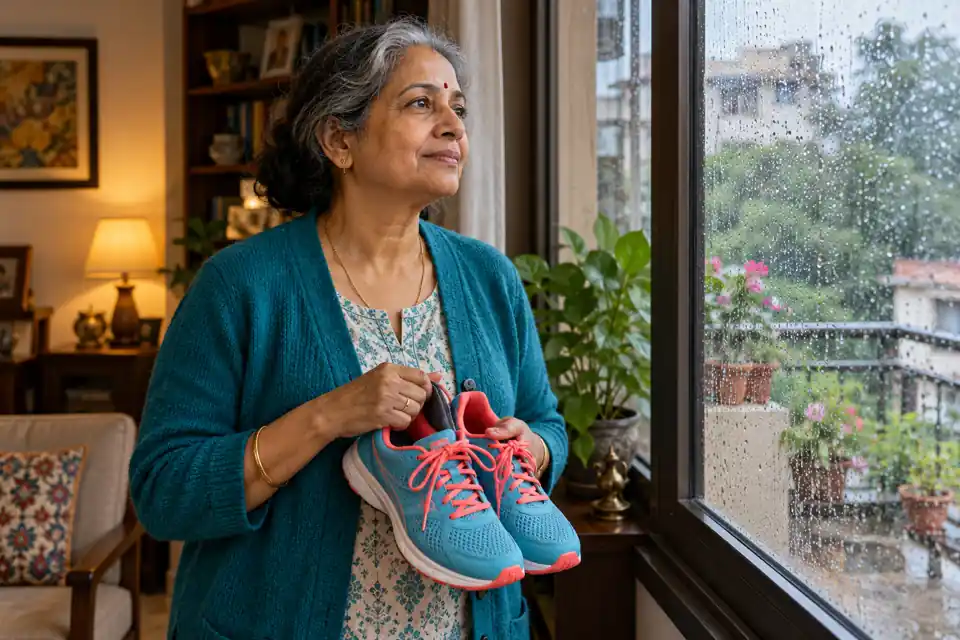
Months later, a granddaughter asked whether she had won a race. Latha said no. She had won back a few mornings. She knew that was not a medal-sized achievement. It was still hers. The shoes grew dusty and familiar. When their colour faded, she kept wearing them, stepping outside before she could talk herself out of beginning again.
Her granddaughter tried the shoes on during a visit and marched down the hallway, heels slipping. She wanted to know whether growing older made trying things frightening. Latha considered the question. Sometimes, she said, because you become practised at telling yourself what sort of person you are. A runner. A homebody. Someone who never learns names. Someone who always gives up. After enough repetition, the descriptions begin to sound like instructions. She did not tell the child that courage meant ignoring fear or forcing herself beyond what was comfortable. In this case, it had meant allowing a modest experiment to remain modest. The next morning, they walked to the park together. Her granddaughter raced towards the flower bed, then came back to match her pace. Latha introduced her to Nalini and the gardener. She had no finish line to point out. She had a place where people knew her name.

An original fictional story created for eautobiography Journal. Characters and events are imagined.