
Family & Legacy · Original fiction
A family discovers that keeping a place for someone can also make room for a new beginning.
A place nobody touched
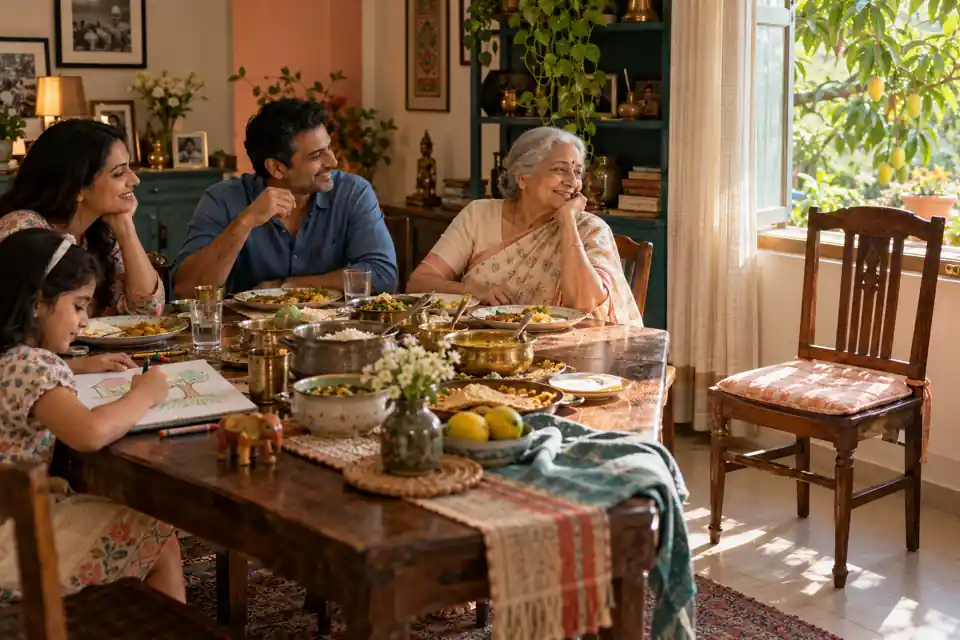
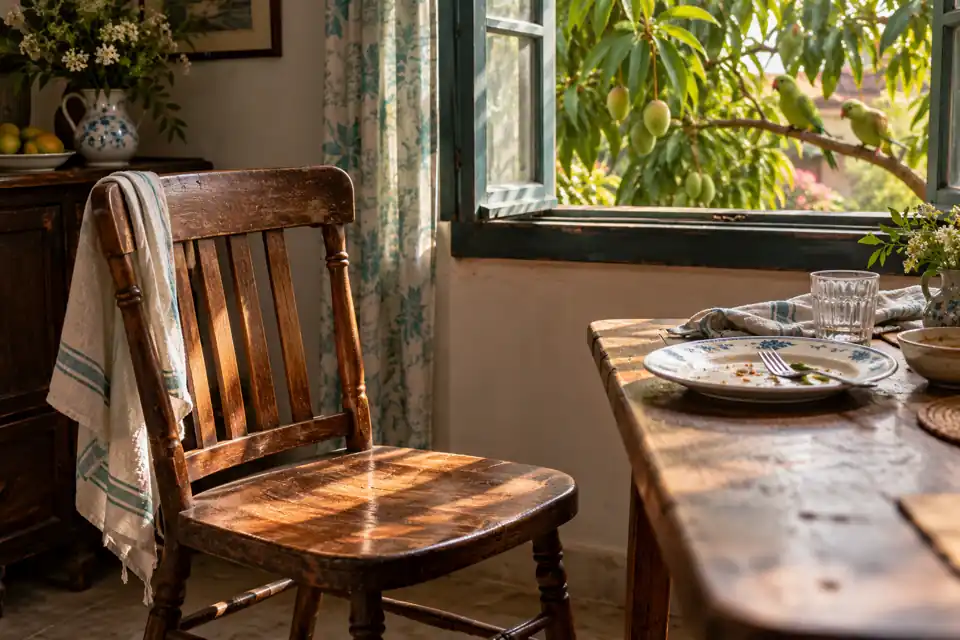
Every Sunday, Arun set six plates although only five people came to lunch. His father’s chair stood beside the window, just as it always had. Nobody suggested moving it. Nobody quite knew what to say about it either. They discussed traffic, school projects and the price of tomatoes, leaving the largest thing in the room untouched.
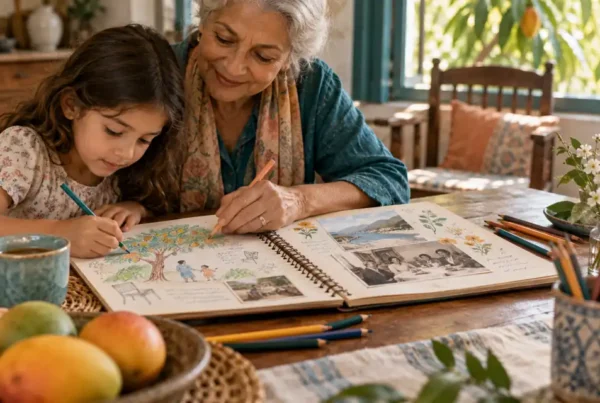
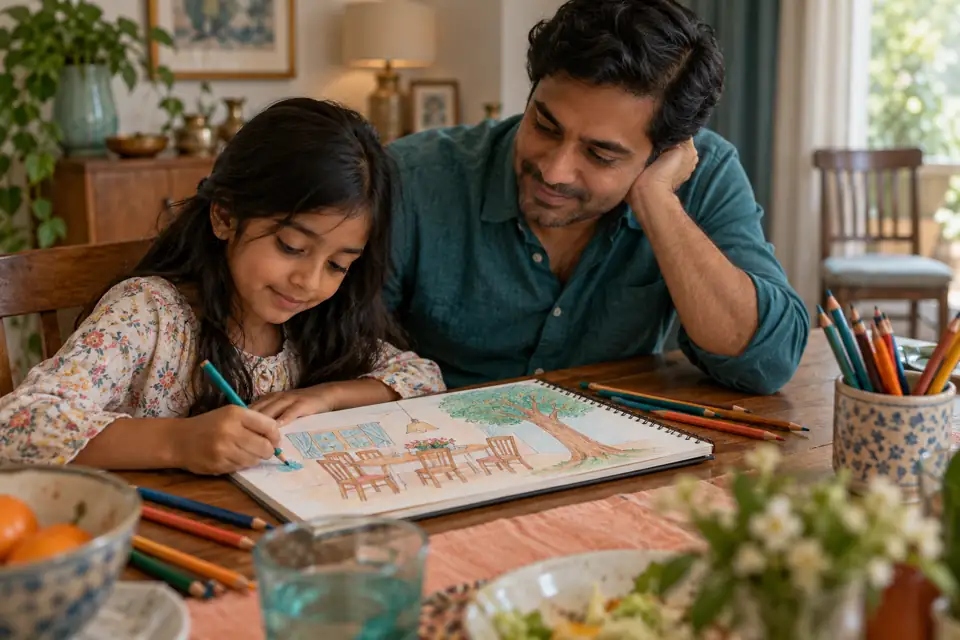
The extra plate had begun as an accident during the first week after the funeral. Arun had counted by habit, and nobody had corrected him. By the following Sunday, the accident had acquired the weight of a tradition. He sometimes wondered whether his mother found it comforting or painful, but asking seemed to risk taking away something she needed. His sister wondered the same thing and kept equally quiet. Even Nila had learned to lower her voice when she passed the chair. The adults mistook that carefulness for understanding. In fact, she was waiting for someone to explain the rules. Could she put her school bag there? Was it all right to look through the window? On that particular afternoon, she had come with a drawing of the dining room. She had left one square blank because she did not know what belonged inside it.
The smallest question
One afternoon, his daughter Nila dragged her drawing book to the table. She wanted to know why her grandfather always sat by the window. Arun almost answered that it was simply his place. Then he remembered: his father liked to watch the mango tree because the first parrot usually arrived before lunch. His sister laughed. Their father had claimed he could tell the time by that bird, though he was reliably wrong.
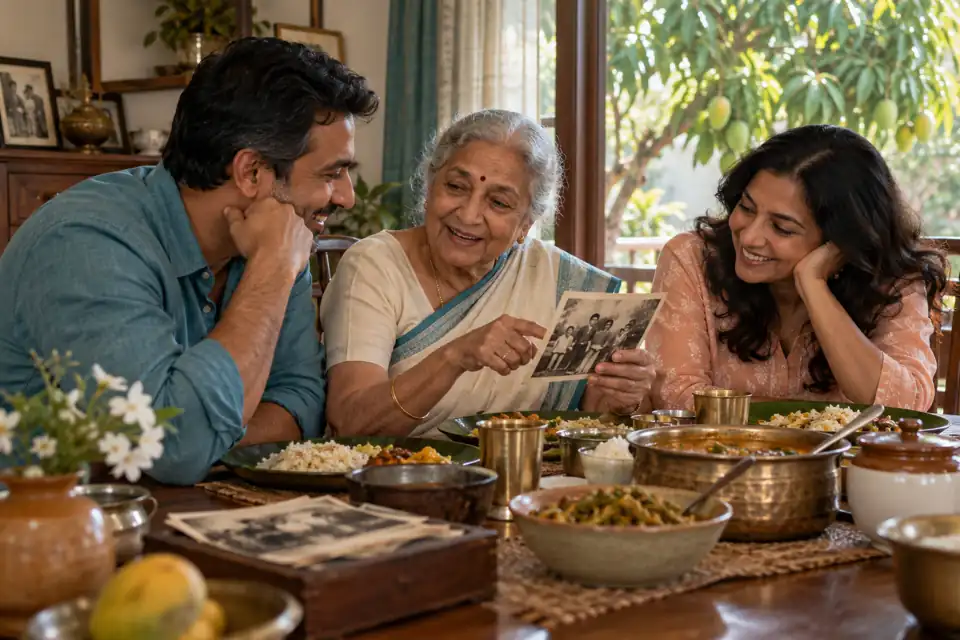
Arun searched for a photograph of the mango tree on his phone and found twelve nearly identical pictures his father had sent the previous summer. Each contained a green blur that was supposedly a parrot. They laughed at how seriously he had labelled them. His mother reached across the table and enlarged one photograph with her thumb. That was the morning the power failed, she said. He had been worried the refrigerator would stop before the milk seller arrived. A memory Arun had dismissed as a pointless message became a small piece of a day he had never witnessed. Nila asked whether she could draw the bird even if she could not see it clearly. For the first time, the family discussed her grandfather without weighing every sentence in advance. The laughter did not feel like disloyalty. It sounded like something he would have interrupted with another unnecessary explanation.
What the chair remembered
One story led to another. There was the chair leg he repaired with a block of wood. The surprise birthday meal ruined by a power cut. The afternoon he sat there teaching Nila to peel an orange in one long curl. Their mother listened, then supplied a story nobody knew: he had bought the chair second-hand after their wedding because it was the only one they could afford. The family had inherited an ordinary object without knowing how much beginning it contained.
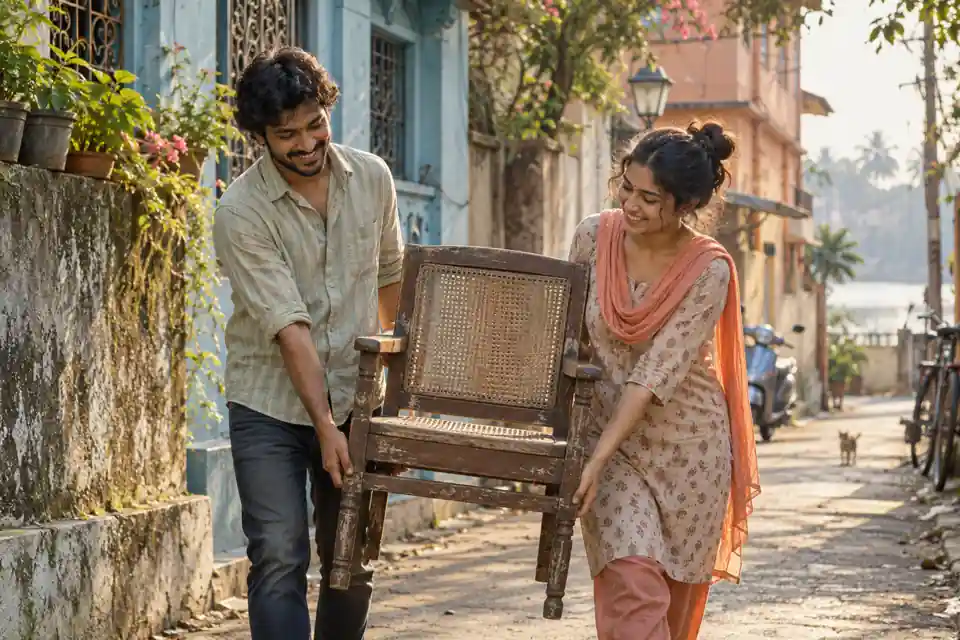
Their mother described the shop where they bought the chair, including the owner who insisted a scratch on the back made it cheaper but not less respectable. They carried it home between them, stopping twice because they were both pretending it was lighter than it was. Arun had heard many stories about his parents’ responsibilities. He had heard very few about their foolishness. His sister asked what they ate that first night. Bread and an omelette, their mother said, because they had spent the last of the available money on the chair. Later, it became the place where bills were calculated, uniforms were mended and birthday candles were counted. None of those uses could be seen in the wood itself. Nila turned her drawing around. In the blank square, she sketched two young people carrying a chair, their faces red from effort, neither willing to admit they needed to rest.
Room at the table
The following Sunday, a neighbour came over after a difficult week. Arun hesitated before offering her the window seat. His mother nodded. The chair was sturdy, she said. It was made to hold someone. Nothing about that gesture erased their loss. They still missed a particular laugh and the sound of a key at the door. But the room felt less like a place where conversation had stopped.
After lunch, Arun’s sister helped wash the dishes while he stood in the doorway, uncertain whether offering the seat had been too abrupt. His mother joined him with a towel over her shoulder. She said she had wanted someone to sit there for weeks, but she had been afraid he would think she was forgetting. He admitted he had continued setting the plate because he thought she expected it. They were quiet for a moment, considering the unnecessary distance their care had created. There was no accusation in the discovery. Grief had made them cautious, and caution had become a language none of them understood. They decided to ask each other more directly next time. That evening, Arun put away the unused plate. He still looked towards the window when a key sounded at the gate. The habit hurt, but it no longer felt like a command to keep every object exactly where it had been.
What they chose to carry
Nila began a page called Things Grandfather Did. Everyone added something. The entries were small, sometimes contradictory and often funny. At lunch, they stopped guarding an empty space and started sharing the life connected to it. Outside, a parrot landed on the mango tree. Nobody checked the clock.
The notebook collected things no formal family history would have thought to include. He always peeled the label from a new jar. He called every unfamiliar dog Captain. He once spent an hour repairing a toy that did not belong to any of them. His sister added a less flattering entry about his refusal to admit when he had taken the wrong road. Their mother read it and wrote an example underneath. Nila began to understand that remembering someone did not mean turning him into a person who had never been difficult. It meant keeping the impatience beside the generosity, the jokes beside the advice. On the next page, Arun wrote about the extra plate and why he had stopped setting it. He wanted his daughter to know that love could change its habits without changing its loyalty. The chair remained by the window, available for the next person who needed somewhere to sit.

An original fictional story created for eautobiography Journal. Characters and events are imagined.