

Memory Keeping & Journaling · Original fiction
A man stops waiting for a remarkable life before writing down the one he has.
Nothing worth writing
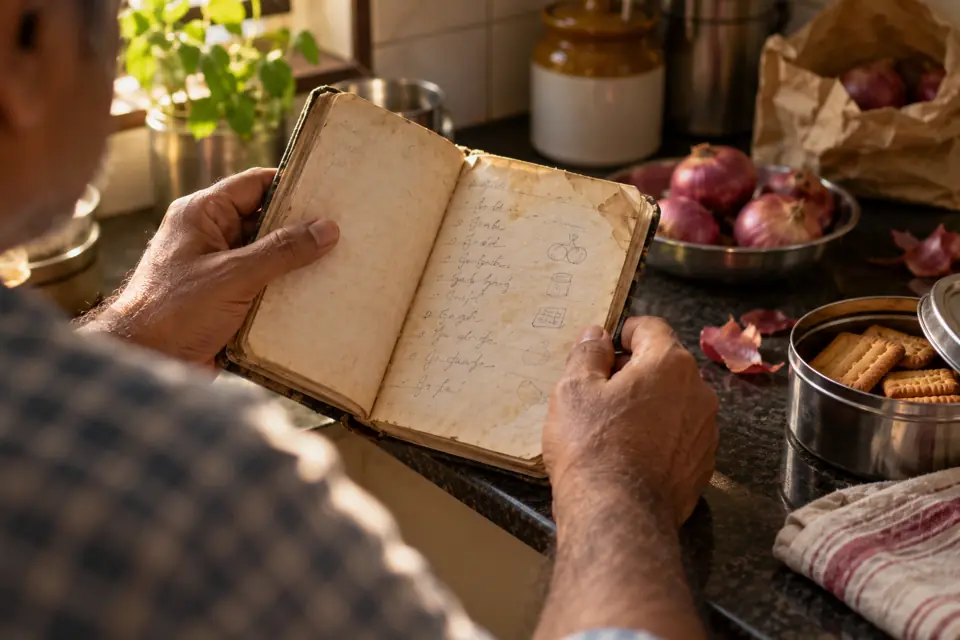
Whenever someone suggested keeping a journal, Joseph said his days were too ordinary. Work, groceries, a bus journey, the same small complaints. He imagined diaries belonged to travellers, leaders and people whose lives could be divided into astonishing chapters. Then he found an old shopping list in his wife’s handwriting, tucked inside a cookbook.
The cookbook had belonged to an earlier version of their household, when evenings required thinking about a child’s lunchbox and whether anyone had remembered to buy milk. Joseph was not sorting it because something dramatic had happened. He was trying to make space on a shelf. That made finding the list stranger. An object he might easily have thrown away seemed suddenly capable of returning him to a life he had lived without recording. His wife examined the handwriting and guessed the note about the moon came from an evening when a neighbour had mentioned an unusually clear sky. She was not certain. They both remembered how busy that period had felt. Joseph put the list in a clean envelope instead of returning it to the book. Then he went to the stationery shop before he could decide that buying a notebook was another unnecessary ambition he would abandon.
A list that held a day
The list asked for onions, soap and the biscuits their son liked. Along the bottom, she had written, Remember to look at the moon. He could not recall the evening. He wished he could. The ordinary objects had survived; the reason behind them had not. Joseph bought a notebook and decided to record one Tuesday, without trying to improve it for an imaginary reader.
At the shop, he rejected a thick diary divided into hourly appointments. It seemed to assume a kind of organisation he did not possess. He chose a thin notebook with plain pages, partly because finishing it looked possible. At home, he wrote his name inside the cover and immediately disliked how official the gesture felt. He turned the page and began with the shopping list. He described the paper, the remembered brand of biscuits and the difficulty of identifying the evening. That first entry contained almost nothing that would interest a stranger. It interested his wife. She supplied the name of the neighbour and remembered a conversation they had held outside the gate. Together, they recovered a fragment rather than a complete scene. Joseph left the uncertainty on the page. He could record what they knew without turning a guess into a fact simply because a story sounded better with an ending.

Three things on a page
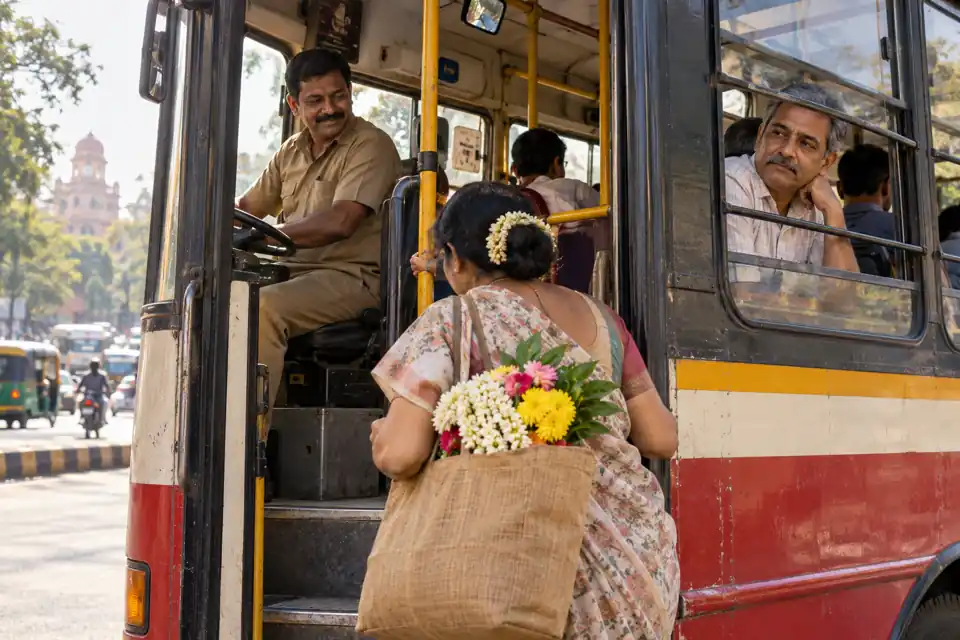
He wrote that the bus driver waited for a woman carrying flowers. That his lunch tasted better because a colleague shared pickle. That his son asked whether clouds could get tired. None of it sounded important. But when he read the page the following month, he heard the question in his son’s younger voice. The notebook had kept something a photograph would not have explained.
The three details of the Tuesday emerged because he paid attention differently on the bus home. He noticed the driver looking in the mirror before closing the door. He heard the woman with flowers thanking him twice. At work, the colleague who shared pickle described making it with an aunt, and Joseph asked which aunt instead of nodding automatically. The answer led to a disagreement about how much oil was necessary and a promise to bring a smaller jar next time. Nothing about the day became less ordinary. It became less interchangeable with every other day. At bedtime, his son’s question about tired clouds nearly disappeared beneath a discussion of school shoes. Joseph wrote it down before checking his phone. Later, when he read the entry aloud, the child insisted the question had been about rain clouds specifically. He added the correction beneath the original rather than replacing the sentence, amused by how quickly family memory could acquire an editorial committee.
An imperfect habit
He missed days and stopped numbering the pages by date. Instead, he gave entries small names: The Blue Lunchbox. Rain Before Breakfast. The Joke Nobody Understood. Sometimes he wrote three sentences; sometimes half a page. He did not force every memory to end with a lesson. A record, he discovered, could be useful without becoming advice.
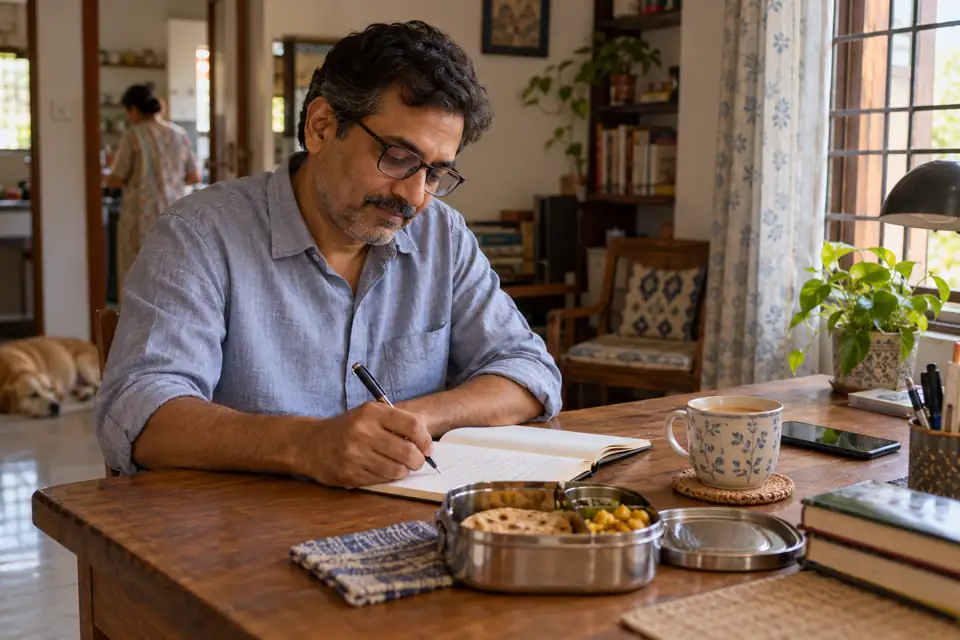
There were weeks when the notebook stayed closed. At first, Joseph felt obliged to reconstruct every missing day. The effort turned writing into an inventory he dreaded. He stopped when he caught himself inventing an apparently representative breakfast because he could not remember the actual one. Instead, he wrote that the week had gone unrecorded and began with what he could see: a button on the table, the sound of rain through an open window, a message from an old friend. The freedom to leave gaps made returning easier. He occasionally added a photograph, but more often he described what the photograph could not hold. The joke before the shutter clicked. The person who was absent. The reason everyone looked tired. He did not share every entry with the family. Some pages were private attempts to understand himself. Keeping memories, he discovered, did not require making all of them available to an audience.
The life already happening
Years later, his son borrowed the notebook for a school project. He returned it with a question about the flowers on the bus. Joseph did not know the woman’s story, but he remembered how patiently the driver had waited. They talked for a long time. The notebook was not evidence that his life had become remarkable. It showed that he had learned to notice it while it was happening.
His son’s school project asked for an account of family life, and Joseph initially offered dates and names. The child preferred the notebook entry about the bus. He wanted to know whether the driver ever learned that someone had written about his patience. Joseph said probably not. The question stayed with him. On his next journey, he thanked the driver more deliberately, without trying to explain the entire chain of memory behind the words. That evening, he wrote a new entry about the conversation with his son. He noticed the notebook had begun to hold moments created by reading earlier pages. It was no longer merely a container. It gave the family reasons to ask questions they might otherwise postpone. When he finished the final page, he did not buy a grander book. He bought another thin one and began with a Tuesday he would once have said contained nothing worth keeping.

An original fictional story created for eautobiography Journal. Characters and events are imagined.