

Oral history is one of the most generous ways to begin a family history book. A conversation can preserve a voice, a way of describing home, and the small decisions that never appear in official records. Yet an interview is only the beginning. To turn it into a readable family story, you need a thoughtful plan for questions, recording, accuracy, privacy, and structure. You do not need to be a professional historian. With care, ordinary family memories can become a clear account that relatives can understand and future generations can return to.
Begin with a question, not a list of dates
A family tree can tell you who is connected to whom, but a conversation can reveal how those relationships felt. Before an oral history interview, decide what you hope to understand. Perhaps you want to learn how a household changed after a move, how a craft or recipe was passed along, what work meant to the family, or how a difficult period reshaped daily life. One guiding question gives the conversation direction without requiring the speaker to deliver a perfect chronological account.
Write a short list of open questions, then be prepared to follow the speaker’s lead. “What do you remember about the first home you made for yourself?” invites more than a question that can be answered yes or no. Ask about objects, sounds, routines, celebrations, and ordinary work. Invite the person to describe what happened before asking what it means now. Leave pauses. People often remember more when they are not hurried toward the next question.
Make the conversation comfortable and consensual
Choose a quiet place and a time when neither of you needs to rush. Explain the purpose of the project, who may read it, and whether the recording will be kept, shared, or deleted after transcription. Ask permission before recording and check again before using a sensitive story in a family history book. Make it easy to pause, skip a question, or stop. Consent is not a formality; it helps protect trust and gives the speaker more control over their own experience.
If the person prefers, take notes instead of recording. If you do record, place the device where it can capture a natural conversation without making the speaker feel observed. Test the sound first. Keep a backup copy in a secure location, and label files with the date and a neutral description. Do not put private details in filenames or share raw recordings widely. These simple habits make oral history work safer and easier to organize later.
Ask questions that bring a memory into focus
Specific prompts often open a door. Ask what a typical morning looked like, what people ate on a special day, how a room was arranged, or which sounds signaled that the day was ending. Invite the speaker to explain the meaning of a phrase or custom that younger relatives may not know. If an answer is brief, try a gentle follow-up such as “What happened next?” or “What do you remember noticing?” The aim is not to interrogate but to make room for detail.
Avoid leading questions that suggest the answer you expect. Instead of asking whether a change was frightening, ask how the person experienced it. Do not insist on a date if the memory is clear but the calendar is not. You can check dates later against letters, photographs, diaries, public records, or other accounts. When several people remember an event differently, preserve those differences rather than forcing one version to stand for everyone.
Separate recollection from records
An interview records what someone remembers and how they understand it today. It is not automatically proof of every date or detail. In your notes, distinguish a speaker’s recollection from information found in a document and from your own interpretation. If you later confirm a detail, keep a simple source note. If you cannot confirm it, phrase it honestly: “She remembered that the journey took place in the rainy season,” rather than presenting an uncertain month as fact.
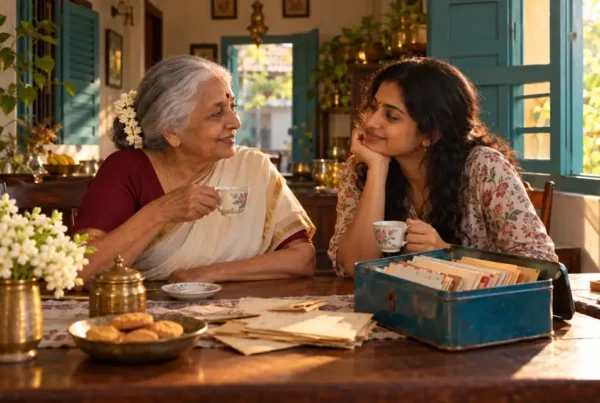
Photographs and letters can prompt an especially vivid oral history conversation. Ask what the speaker notices in the image, who might have been behind the camera, and what happened just before or after it was taken. Record the answers beside the item. An image may verify clothing or a setting, but it cannot establish everything someone remembers. Treat family artifacts as useful clues, not complete explanations.
Turn the interview into a story readers can follow
After the conversation, make a working transcript or detailed notes. Mark unclear words and questions to revisit. Then look for a thread: a place that changed, a responsibility carried across generations, a choice that altered the family, or a tradition that adapted over time. A family history book does not need to include every fact you collect. Select scenes and context that help readers understand the people and the changes that shaped their lives.
Use a structure that suits the material. You might organize chapters by time, place, theme, or a sequence of turning points. A family tree can sit near the beginning as a reference, while the narrative explains relationships in plain language. Introduce relatives when readers first need them and remind readers how they connect. If the project is short, a handful of linked stories may be more effective than a long chronology that rushes through every decade.
For ideas on combining names, relationships, and memories, see this guide to building a family tree rich with stories. Let the tree orient the reader; let the interviews explain the lived connections behind it.
Write with respect when stories involve other people
A family story may contain private information about people who are alive, absent, or unable to respond. Ask whether a detail is necessary to understand the story. Consider seeking permission before including intimate or potentially harmful material. You can preserve the emotional truth of an experience while leaving out identifying details that do not serve the reader. When accounts conflict, make the difference clear and avoid turning uncertainty into accusation.
Offer the speaker a chance to review their own quoted words or the section that relies heavily on their interview. Explain what kind of edits you are inviting, such as corrections to factual details or requests to remove private information. Keep editorial decisions clear. Respectful collaboration does not mean every family member must agree on every interpretation; it means people understand how their words may be used and are treated with care.
Preserve the voice as well as the information
When editing a transcript, remove repeated filler only when it improves readability. Keep distinctive expressions, humor, and the rhythm of the speaker’s voice where they help readers hear the person. Do not imitate an accent through exaggerated spelling. If a word or custom may be unfamiliar, explain it briefly in context. The aim is a readable story that still sounds like the person who shared it.
Some families will prefer a printed family legacy book. Others may want a digital collection that brings together writing, photographs, scanned letters, and audio. A digital autobiography or family archive can preserve more than one format, but it still needs clear labels, backups, and agreed access. Keep a copy that does not depend on one device or one person’s account. Record who contributed each item and any limits on sharing it.
A practical plan for your first three interviews
Start with three conversations rather than trying to interview everyone at once. Choose a shared topic, such as a family home, a celebration, or a workday. Ask each person the same few open questions, then allow the conversation to go in a different direction. Afterward, note repeated themes and differences. This can help you see which family memories form a meaningful pattern and where a follow-up conversation would help.
Create a simple folder for recordings, transcripts, source notes, and permissions. Give each file a consistent date and topic label. Keep the original recording unchanged and edit a copy. If you are working with a family history writer or editor, agree on the project’s audience, privacy boundaries, and final approval process before sharing materials. A clear plan prevents confusion and gives everyone a better sense of how their contribution fits into the whole.
Let the story travel beyond one generation
Recording family stories is not about making a perfect record. It is about preserving the texture of a life: what people valued, how they adapted, what they laughed about, and what they hoped would continue. A family history book can connect a family tree to the everyday choices behind each branch. It can also give younger relatives a way to ask new questions and add their own memories.
Start with one respectful conversation, listen without rushing, and write down what you learn while the details are fresh. Over time, those interviews can become generational stories, a family legacy book, or a personal history that holds several voices together. For more guidance, browse the Life Story, Memoir & Legacy collection. The most lasting result may be more than a finished book: it may be the attention and connection created while the stories are being told.