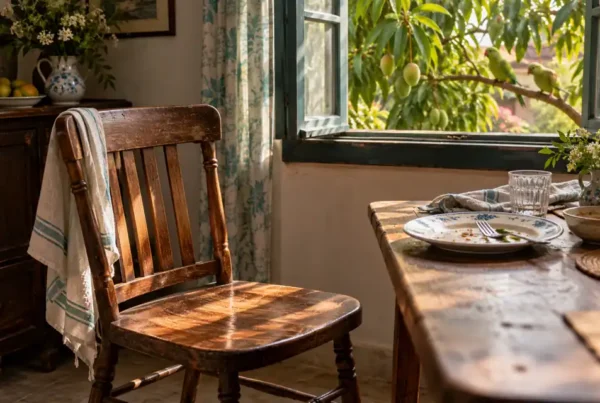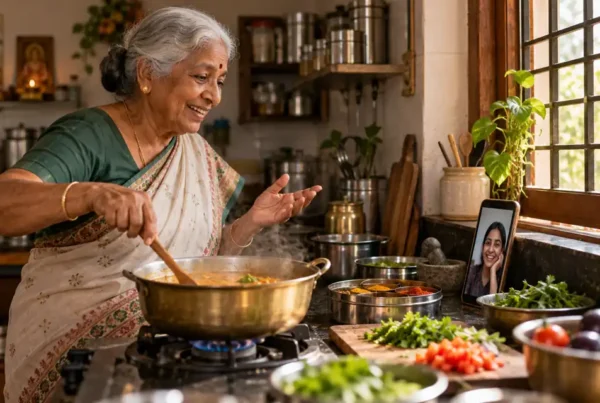


If you are wondering how to write a life story that feels real, begin with a place you can still picture: the narrow kitchen where everyone gathered, the bus stop where a first job began, a rented room in a new country, or the shoreline visited whenever the family needed quiet. In an autobiography, memoir, or family history, place is more than a backdrop. It holds sounds, habits, relationships, and the feeling of who you were there.
If you want to write your life story and do not know where to begin, start with a place you can still picture. You do not need to remember every detail perfectly. You need a specific scene, honest reflection, and a way to show why that setting mattered. This guide explains how to write about a place in a personal history or family history book so readers can enter the scene and understand what it meant.
Begin with one place, not your whole life
“Where I grew up” may be too large a subject for a first page. Narrow it to one address, room, street, schoolyard, shop, farm, workplace, or meeting place. Ask yourself which location returns most clearly when you think of a particular chapter in your life. The answer might be an ordinary place rather than a landmark.
Write a quick list of places connected to different ages or changes: a childhood home, a family gathering place, a first apartment, a workplace, a house shared with children, a place you left, or somewhere you returned to. Circle one that carries a clear feeling. A strong opening does not have to be dramatic. It might be the first morning you woke in a new room, the familiar sound of a gate, or the place where a family ritual happened every week.
Think of a location as a doorway into a scene. Instead of explaining that a home was important, show one moment that proves it. Who was there? What were you doing? What changed before the scene ended? These questions help a life story feel lived rather than summarized.
Rebuild the scene with sensory details
Readers need a few concrete details to imagine the place. Close your eyes and recall what you saw, heard, smelled, touched, or tasted. Perhaps sunlight reached only one corner of the room. Perhaps the floor creaked near the stairs, rain tapped on a metal roof, or a cooking smell drifted from a neighbour’s home. Choose details that belong to your memory instead of adding decoration because it sounds literary.
Make a small “place inventory” before drafting:
- What could you see from the doorway or window?
- Which sounds, smells, textures, or weather do you remember?
- What objects were always in the same place?
- How did people move through the space?
- What felt welcoming, difficult, private, or unfamiliar?
Show what the place meant then—and what it means now
A place can hold more than one truth. A childhood home may feel safe in one memory and tense in another. A town may have offered opportunity while also making you feel like an outsider. Your autobiography becomes more human when you let those feelings sit beside one another without forcing a neat conclusion.
Try a two-part reflection. First, describe what you understood at the time. Then, briefly say what you can see from today’s perspective. For example: “At twelve, I thought the long journey meant we were far from everything. Now I remember how many neighbours made that road feel familiar.” This shift gives the reader context while keeping the younger self’s experience intact.
Do not make the place responsible for every decision or difficulty. Instead, show how it shaped what was possible, what you noticed, and how you felt. One person may remember the same street as a source of freedom; another may remember rules, pressure, or change. The point is not to give a universal verdict. It is to tell what the place meant in your life story.
Gather memories and check what can be checked
Memory is personal, and it can be incomplete. That does not make it useless. It helps to distinguish what you remember directly from what you learned later. If dates, names of streets, ownership, or a building’s history matter to the chapter, check a family photograph, letter, diary, map, record, or conversation with a relative. In oral history, ask open questions such as “What do you remember about that house?” rather than suggesting the answer you hope to hear.
If you are making a family history book, include useful context without turning the chapter into an encyclopedia. A sentence about a move, a local custom, or a major change in the neighbourhood may orient readers. Keep the focus on people’s lived experience: what they did, what they hoped for, and how the place affected daily life.
Organize the writing around a scene and a change
A place-based chapter can follow a simple shape. Open inside a specific moment. Let the reader see the place through your actions and details. Add background only when it helps explain the scene. Then reflect on what changed, what stayed with you, or why you remember it now.
You can also use the same location as a thread across time. Return to the house at different ages, or compare the place as you remember it with what you found on a later visit. This structure suits a memoir because it follows meaning rather than merely listing addresses. Keep each return distinct: what did you notice then, and what did you understand later?
For a longer autobiography, you might organize places in a timeline: early home, school, first work, adult home, and places connected to later generations. Not every move needs a full chapter. Choose those that changed your relationships, sense of belonging, or daily life. A reader wants to understand the human significance, not an inventory of every location.
Write about home with care and privacy
Places can identify people. Before sharing a current address, a small location, or details about someone else’s home, consider whether the information is necessary and whether it could create discomfort or risk. You can change minor identifying details, use a broader description, or leave out a private fact. Be clear with yourself about what is remembered, what is inferred, and what belongs to another person’s story.
A short exercise to start today
Set a timer for fifteen minutes. Choose one place from your life and write a scene using these prompts:
- Where are you, and how old are you?
- What is happening in this exact moment?
- Which three details make the place recognizable?
- Who else is present, and what do they do?
- What did you understand then?
- What do you understand now?
Do not stop to correct every sentence. After the first draft, underline the details you remember most clearly. Remove anything that feels invented or generic. If you need context, add it after the scene, not before it. This practice can help you write your life story without waiting for a perfect beginning.
Let the place open a wider family story
A remembered place can connect one person’s experience to family history and generational stories. Perhaps a house held a weekly meal, a garden became a gathering point, or a neighbourhood changed as relatives moved in and out. Explain the tradition through a scene rather than a list of facts. What did people do? What did children notice? What would a younger relative not know unless you wrote it down?
Not every family story needs to be grand. Ordinary routines often show how people cared for one another, handled scarcity, celebrated, or made a new place feel like home. These memories can help descendants understand the people behind the family tree. They can also show that a family history is made from daily life, not only from formal records.
Keep the story honest and specific
When you write about a place that shaped you, resist the urge to make it perfect, dramatic, or symbolic in every sentence. Let the real details carry the emotion. Say what you know, acknowledge what you cannot remember, and leave room for the reader to draw their own meaning.
One scene can become a chapter, a memoir passage, or the start of a family history book. If you are planning a longer project, gather these scenes in a timeline and connect each one to a decision, relationship, or change. For more guidance, see how to write your life story online, explore family history preservation, or learn about a digital autobiography for keeping memories and photographs together.
Your first draft can be small: one room, one walk, one remembered conversation. A clear scene gives your reader something to stand inside. From there, you can build a personal history that preserves not only where you lived, but what those places made possible and what you carried with you when you left.