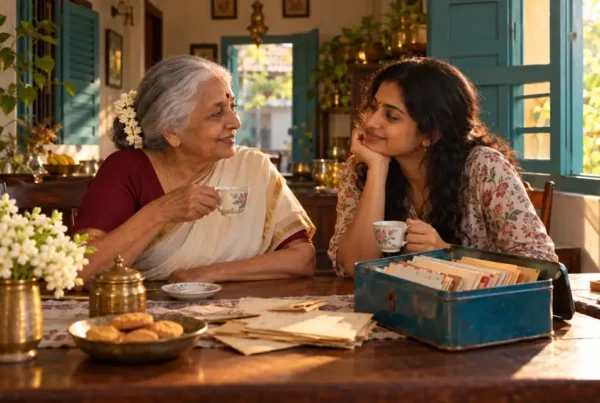


Memoir writing for caregiving is more than a record of tasks, appointments, and difficult choices. It is a way to remember a relationship as it changed: a joke that survived a tiring week, an old ritual that still mattered, the kindness exchanged, and the moment you had to become someone new. A caregiving story can honour a loved one without making illness or dependence the whole plot.
It can also make space for the caregiver’s uncertainty, tenderness, fatigue, and growth. You do not need to know the ending before you write. Begin with one true scene and let its meaning emerge. The goal is not to prove you were always patient or that every decision was right, but to tell the truth with care so future readers can meet the full human being behind the role.
Begin with the person, not the diagnosis
When caregiving becomes central to family life, it can crowd out older memories. Restore the person’s wider identity: What did they enjoy before support was needed? What made them laugh? Which opinions, rituals, skills, or contradictions stayed recognisably theirs? What did they teach through example, even if they never thought of themselves as a teacher?
Write a short portrait from before the caregiving years. Describe a familiar room, a way of welcoming guests, a favourite subject, or a habit everyone expected. Specific details do more than generic praise. A scene can let readers see someone’s warmth, wit, stubbornness, or quiet generosity. This beginning reminds you that a life is larger than its hardest chapter.
Choose a question to guide the story
A caregiving memoir need not cover every year. Choose a question that helps you decide which memories belong: How did a parent and adult child learn to depend on each other? How did a household adapt? What did love look like when it had to become practical? A question is a compass, not a thesis to prove. It gives memoir writing direction while leaving room for surprises and conflicting feelings.
List six memories that seem connected. Some may be joyful, some uncomfortable, and some ordinary. Notice what repeats: a promise, a fear, a change in roles, a place where you felt capable, or a moment when you asked for help. Those repetitions can become a theme for your life story book without forcing events into a neat lesson.
Build a flexible timeline around turning points
When months blur together, make a simple timeline. Mark moments when daily life changed: the first conversation about support, a move, a new routine, a family decision, a return to an old activity, or the point when another person stepped in. Add dates only when you know them. “Late winter” or “the week after the festival” is more honest than a guessed day.
Then choose a few scenes that show the change instead of listing every task. One might reveal how responsibilities were shared; another might show what a familiar tradition meant after routines shifted. Photos, calendars, letters, and an oral history conversation can help check details, but they should support your story rather than interrupt it. Memory can be meaningful without being a perfect archive.
Let ordinary details carry emotion
Care is often made of small acts: preparing a favourite drink, repeating a story, finding a comfortable chair, or sitting together without filling the silence. Such details make a scene vivid because readers can understand what the action meant. A handwritten list may show how a household tried to stay steady; a familiar song may hold a whole season of memory.
Use the senses selectively. What could you hear from the next room? What did the light look like at day’s end? Which object became important because it was always within reach? A few precise details are stronger than a long inventory. They help preserve family memories in a grounded way, not like a medical report or a collection of inspirational slogans.
Write difficult moments with dignity and boundaries
Some memories involve fear, conflict, confusion, or private information. Before including one, ask what the scene contributes and whose privacy it touches. You can tell the emotional truth without publishing every detail. Change identifying details, summarise a conversation, or leave a scene out. A memoir is not an obligation to disclose everything, and a family legacy book should not turn a vulnerable moment into spectacle.
Where possible, discuss shared memories with the people who appear in them. They may remember a detail differently or ask you not to include something. Listening does not mean abandoning your perspective; it helps separate what you witnessed, what you were told, and what you understand now. If the loved one cannot participate, write with restraint and compassion. Keep a private draft for material you are not ready to share.
Give the caregiver a full emotional life
Caregivers are often praised as endlessly selfless. That image can make honest writing feel disloyal, especially when you remember frustration, resentment, exhaustion, relief, or the wish for one ordinary day back. These feelings do not cancel love. They are part of caring for someone over time. With context, they help readers understand pressure without blaming the person who needed support.
Write about what helped you continue and what did not. Perhaps another relative took a turn, a neighbour brought a meal, a friend listened, or you learned to say no to one more commitment. If support was unavailable, say so plainly. The point is not to compete over who sacrificed most, but to show how relationships and responsibilities changed.
Use other voices without losing your own
Family memories are rarely held by one person alone. A sibling may remember a visit differently; an older relative may know what happened before your memory begins. Invite an oral history conversation with open questions: “What do you remember about that year?” or “What did our family do when plans changed?” Ask permission before recording. Let the exchange feel like a conversation, not an interrogation.
Identify each voice in your notes, then decide whether to quote, paraphrase, or let the memory guide your reflection. You can preserve a family story without pretending that everyone agrees. Differences may reveal what each person needed, feared, or noticed, and may suggest a larger family history project beyond this memoir.
Shape scenes into a story, not a task list
Arrange memories so readers can feel movement. You might open with a moment that captures a new responsibility, move backward to show the relationship before it changed, then return to the present. Or use short chapters built around a place, object, or turning point. Chronology helps, but it is not the only structure for an autobiography or memoir.
For each scene, ask: What did I want at the time? What made that difficult? What changed by the end? The answer can be small: you accepted practical help, recognised a boundary, or understood that a familiar routine had become a gift. Brief reflection between scenes connects what happened to what you know now and gives a personal history shape without forcing a grand conclusion.
Make room for life after the hardest chapter
A caregiving story need not end with a crisis or loss. If the relationship continues, include how it keeps changing. If caregiving has ended, write about the quiet period that follows, the memories that return unexpectedly, and the routines you are learning to keep or release. Avoid promising that everything becomes clear. An honest ending might be a small image of connection, an unanswered question, or a choice to keep telling the story.
Ask what you want younger family members to understand: the person’s humour, a difficult choice, the help that mattered, or the fact that care can be loving and tiring at once. These are valuable parts of family history. They give descendants context, not just names and dates, and show that legacy includes ordinary acts as well as public achievements.
Revise the draft, then choose how to share it
Read each scene for accuracy, clarity, and kindness. Separate what you remember from what you later learned. Check dates with records where useful, but do not let research erase the emotional truth of your experience. Remove repeated explanations and keep the details that help a reader understand the people in the room. A trusted reader can tell you whether your loved one feels fully human on the page.
You can begin privately in a notebook, record a voice memo, or use an online workspace. If a writing partner would help organise the material, explore writing your life story online or learn about ghostwriting support. Families gathering several perspectives can explore family history preservation to connect one person’s account with the stories around them.
Try this exercise: write for ten minutes about one moment when care changed an ordinary day. Include where you were, what happened, what you could not say then, and what you understand now. Do not edit while writing. That page can begin a memoir, autobiography, or family history book. If you want a guided place to continue, explore the digital autobiography platform and start with the memories you already carry.
There is no perfect way to tell a caregiving story. Begin with the next honest detail: a laugh, a hard conversation, a familiar object, or a moment when you both found your footing. Writing the relationship in all its complexity gives your family more than a record of what happened. It gives them a life story that holds care, choice, imperfection, and love together.