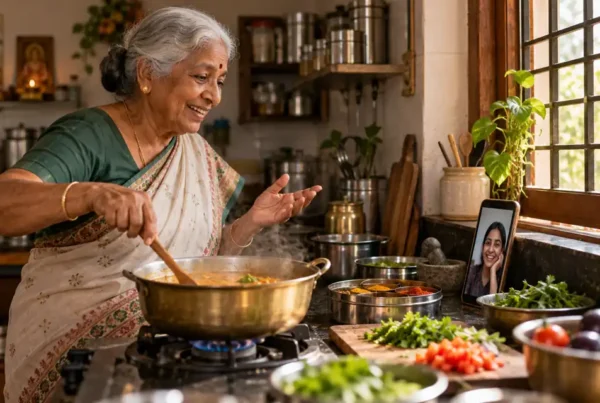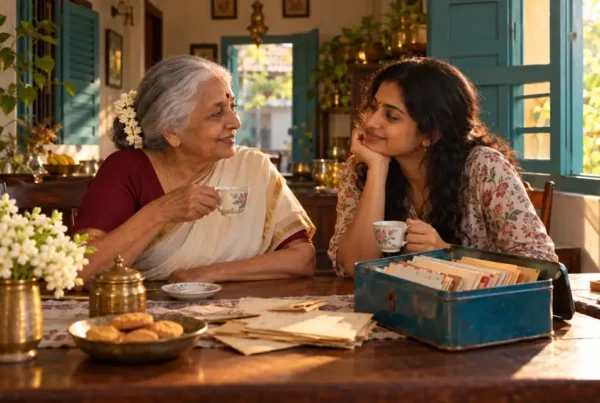

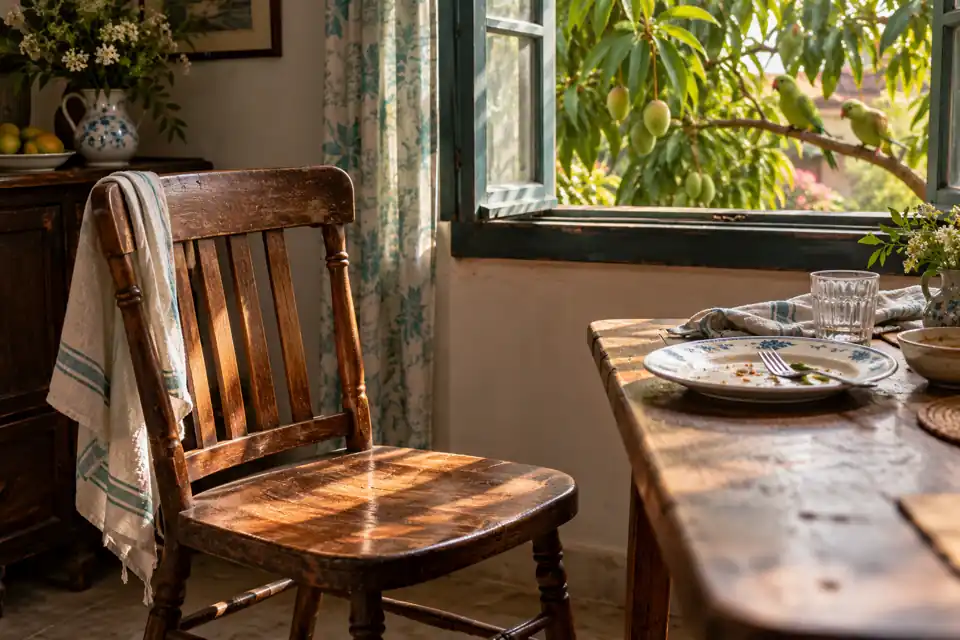
Memoir writing after loss can begin with an empty chair at a familiar table. A phrase, recipe, song or small habit may bring back the person you miss more clearly than a list of dates ever could. Writing gives those details a place to live. It does not need to explain everything or turn grief into a neat lesson. It can simply preserve the texture of a life: how someone welcomed guests, what they worried about, how they laughed and what they hoped their family would remember.
If you are beginning memoir writing after loss, start gently. You do not have to write a complete autobiography or decide what the finished life story will look like. One honest memory is a beginning.
Begin memoir writing after loss with one memory
People often delay writing because they imagine they must begin at birth and cover every year. A personal history can be built from meaningful scenes instead. Choose one moment you can picture: a walk to the market, a long conversation, the way your loved one prepared for a celebration, or the ordinary evening when everyone gathered at home. Write what you noticed before explaining what it means.
Use the senses as memory prompts. What could you hear from the next room? Which objects were always nearby? What did the light look like? What words did the person repeat? These small particulars make family memories vivid for someone who never met them. A scene can hold a whole relationship without trying to tell the whole life at once.
Decide what you want this memoir to keep
Before collecting pages of notes, ask what you hope the writing will preserve. Perhaps you want children to know how a grandparent grew up, or you want siblings to remember a parent beyond the final difficult months. You may be making a family history record, a private journal, or a family legacy book to share with future generations. There is no single correct purpose.
Write your purpose in one sentence and keep it where you can see it. “I want my grandchildren to know what made their grandmother laugh” is more useful than “I must write everything.” This intention helps you choose which stories belong and which details can stay private. It also reminds you that the memoir is for people, not for a perfect timeline.
Collect scenes before arranging a timeline
Create a simple memory map with a few headings: childhood, home, work, friendships, celebrations, challenges, beliefs and everyday routines. Add names, places, photographs or objects that bring a story to mind. Do not force the memories into chronological order yet. Memoir writing after loss can move between years when a meaningful connection brings one scene to another.
If an old photograph is available, note who is present, where it may have been taken and what was happening just before or after the picture. Avoid assuming that the image tells the whole story. A caption such as “Family picnic, perhaps near the river, late 1970s” is more trustworthy than a confident date you cannot verify. Preserving family memories includes preserving what is known and being honest about what remains uncertain.
Ask relatives gentle, specific questions
When relatives are ready, invite them to share one story at a time. Broad questions like “Tell me everything about your father” can feel overwhelming. Try “What did he do when he was pleased with a meal?” or “Which song reminds you of that house?” Specific questions often open the door to a fuller oral history because they help a person return to a scene.
In memoir writing after loss, consent matters as much as detail. Make it clear that anyone can skip a question, stop, or ask you not to share a detail. Listen without correcting every difference in recollection. Two family members may remember the same event differently; you can record both perspectives and name them as memories, rather than choosing a winner. This approach keeps the writing respectful and lets family history hold more than one voice.
Let ordinary moments carry meaning
A life story is not made only of major achievements. The familiar way someone folded a newspaper, called a friend, repaired a loose button or welcomed a new neighbour may reveal more about their character than a list of awards. These details show how values became actions in daily life. They also give readers a way to recognize the person, not only the milestones.
When you write a scene, include the people who were there and what each person did. Let humor, impatience, tenderness and contradiction appear naturally. A loved one does not have to be portrayed as flawless to be remembered with love. A thoughtful memoir can honor someone while allowing them to remain fully human.
Write about grief without forcing a lesson
Some days you may be able to write for half an hour; other days, one sentence may be enough. You do not have to end every chapter with acceptance, wisdom or closure. If a memory feels too heavy, write a note about it and return later, or choose a gentler scene. The pace belongs to you.
It can help to separate what happened from what you understand today. First describe the event as you remember it. Then, if it feels right, add what you think about it now. This leaves room for change. The meaning of a loss, a disagreement or a family decision may look different over time, and your writing can acknowledge that without pretending to settle every question.
Keep the story accurate and considerate
A memoir may include other people’s lives as well as your own. Before sharing sensitive details, consider privacy, consent and the effect publication could have on living relatives. Use care with medical, financial or deeply personal information. You can change identifying details when appropriate, leave out a scene, or write a private version that is never published.
If memories conflict with documents, do not quietly turn a guess into fact. You can write “I remember it this way,” “my aunt recalls something different,” or “the date is not clear.” Honest uncertainty protects the trust of readers. It also makes the work more useful as a family history than a polished account that claims more certainty than the evidence supports.
Choose a form that fits your family
The finished work might be a short collection of scenes, a longer memoir, a digital life story, a printed family history book or a private file shared with a few relatives. You can combine photographs, captions, letters, recipes and remembered conversations. A family legacy book does not need to be large to be meaningful. A few carefully chosen stories can help future generations understand the people and places that shaped them.
If you are also documenting someone else’s life, our family biography guide offers another way to organize one relative’s story. Let the needs of your readers shape the format: a child may enjoy short scenes and pictures, while an adult relative may want context about family history and earlier generations.
When speaking is easier than typing
Memoir writing after loss can begin with speaking, especially when emotions are close or a blank page makes every sentence seem permanent. Try recording a voice note as if you were telling one memory to a trusted person. You can transcribe it later, keep the spoken version, or ask a family member to help shape it into readable prose. A spoken story still counts as a record of family stories.
If you want a writing partner, you can explore eAutobiography’s ghostwriting service. The important thing is that the final words reflect the real person and the memories you choose to share. Support should make the process easier, not take ownership of the story away from you.
A small beginning for this week
Choose one photograph or household object. Write five details you can see, then write one memory it brings back. If you are comfortable, ask a relative what they remember about the same moment. Save the notes in one place, add the date and names you know, and leave gaps where you are unsure. This is enough for a first session of memoir writing.
Later, you can decide whether the notes belong in an autobiography, a family history, or a private collection. You might build them into a wider account of family memories and generational stories, or keep them as a page that only you need. The writing does not have to be finished to be valuable.
Memoir writing after loss can preserve the small ways a person shaped daily life, even when grief changes the way a family remembers. A sentence, a ritual or a story told around the table can carry that presence forward. Start with one scene, keep it honest, and let the next memory arrive in its own time.