
Childhood & Growing Up · Original fiction
A school reunion brings back the kindness one child thought nobody remembered.
The reunion photograph
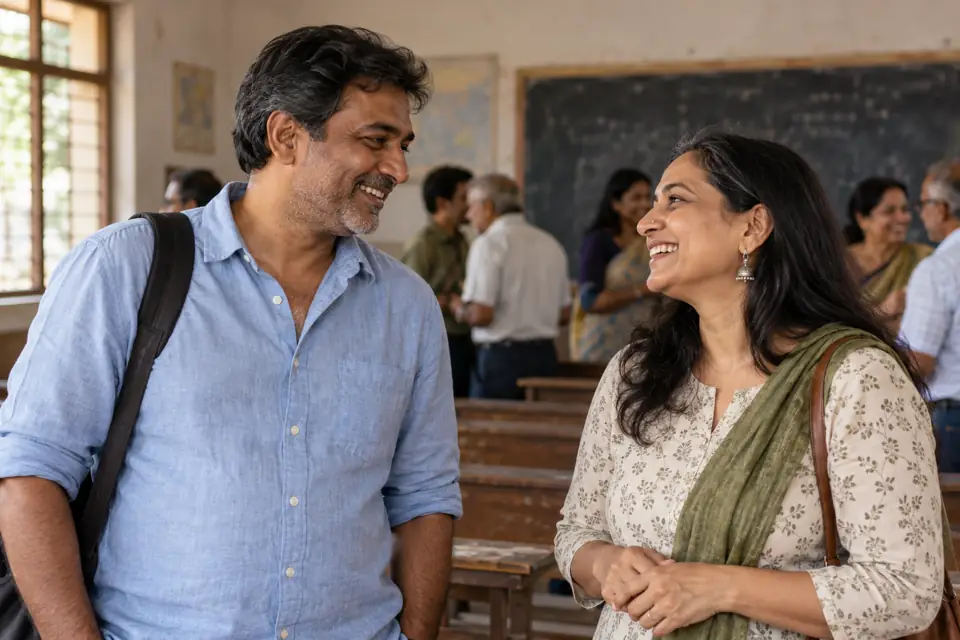
At the school reunion, everyone seemed to remember someone louder than Ravi. The sports captain. The girl who won every debate. The boy who could imitate the headmaster. Ravi had spent years assuming his own place in those memories was small. He stood near the photograph display, ready to leave after tea.
He had almost declined the invitation. The message arrived in a group where people shared photographs of children, holidays and professional milestones. Ravi read most of it without replying. He could not decide which version of himself would be expected at the reunion: the quiet boy he had been or the successful adult he worried he was supposed to have become. His wife suggested that he go for an hour and come home if he disliked it. That limited promise made it possible. At the venue, someone gave him a paper badge with his name written too small. He stood beside a photograph of a classroom excursion and searched for his younger face. The children crowded into the picture seemed certain of one another in a way he did not remember feeling. He wondered how much of belonging was visible only after the moment had passed.

A name across the room
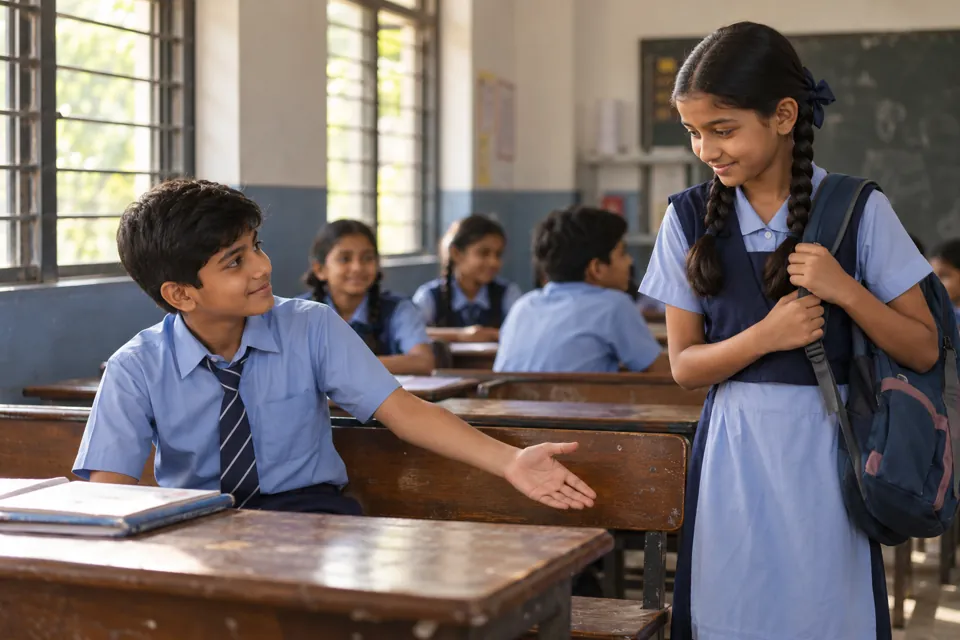
Then a woman called him by an old nickname. It took him a moment to recognise Farah, who had joined their class halfway through a term. She asked whether he still saved seats. Ravi laughed without understanding. She pointed to a photograph of a classroom trip. Every morning that year, she said, he had put his bag on the bench until she arrived.
Farah remembered the bench near the second window. Ravi remembered that the window rattled whenever a heavy vehicle passed outside. They compared these unnecessary details with the seriousness of people checking an address. She said she had looked for his bag each morning before she looked for him. If it was on the bench, she knew she would not have to ask where to sit. Ravi felt a rush of recognition mixed with discomfort. He had never imagined the gesture required remembering. He began to say it was nothing, then stopped. Farah had taken the trouble to tell him what it meant. Calling it nothing would dismiss her experience in the name of modesty. Instead, he asked how long the journey to school had taken. She said almost an hour, sometimes longer when the bus broke down. He remembered her arriving breathless, trying to make it seem as if she had not hurried.
What a child could not explain
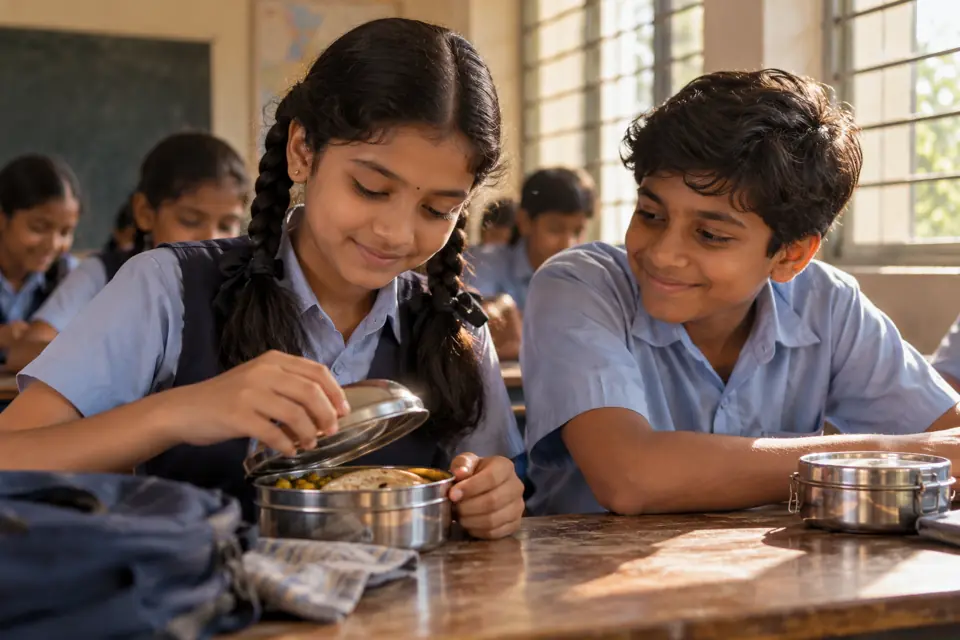
He remembered her now: new uniform, a long journey to school, a lunchbox she rarely opened at first. He had not known how to ask why she seemed frightened. He only knew the other benches filled quickly and that standing alone at the door looked terrible. So he moved his bag when she came in. To him, it had been the easiest solution. To her, it had been the first sign that she was expected somewhere.
Once, he recalled, another boy had asked why he kept reserving the place. Ravi had answered that Farah needed to see the blackboard from that side. It was not entirely true, but it was an explanation the other child accepted without teasing. He had forgotten that small invention until the reunion. Farah remembered it differently. She thought he had told the boy that the bench was crooked and only she knew how to sit on it. They laughed at the disagreement. Neither account needed to defeat the other. What mattered was that somebody had made a place feel available. Ravi began to see his school years as more than a ranking of achievements and embarrassments. There had been quiet negotiations everywhere: a pencil lent without being requested back, a joke explained to a newcomer, a lunchbox moved to make space. Childhood had contained a language of welcome he had used before he could describe it.
The size of a small kindness
They talked about the teachers, the terrible excursion sandwiches and the day the classroom fan stopped working. Farah explained that she had been adjusting to a new city and a difficult change at home. Ravi did not turn the conversation into a speech about his own goodness. He listened. He was grateful to learn what a child had been unable to tell another child at the time.
Farah did not tell him everything about that difficult year, and he did not ask her to. She explained enough for him to understand why the doorway had felt daunting. Then she turned the conversation towards his own life. Ravi was surprised by the relief of answering without presenting it as a report of success. He described work he sometimes enjoyed, a family he loved and a habit of thinking everyone else knew how to enter a room more easily than he did. Farah said she still checked whether a gathering had somewhere to sit before she decided how confident to look. Across the hall, people were rearranging themselves for another photograph. Several classmates were missing. Some had not been found; others could not come. The room held familiar faces and invisible gaps. Ravi stayed longer than the hour he had promised himself, not because his shyness vanished, but because it no longer seemed a reason to leave.
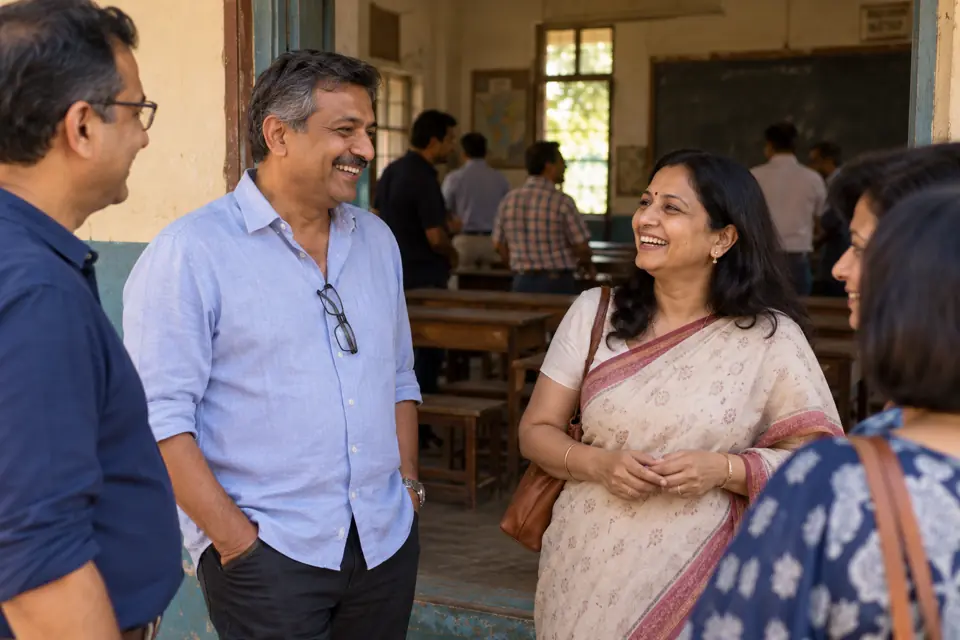
A place in the picture
Before he left, they took a new group photograph. Someone called for the people at the back to move closer. Ravi noticed a former classmate lingering beside the doorway. He shifted his chair and waved. There was space, he said. This time, he understood that the smallest welcome might be the part of a day someone carried longest.
On the journey home, he thought about how easily he had divided classmates into people who mattered and people who watched from the edge. The conversation had not transformed him into the hidden hero of his own school years. It had made that division seem less useful. He wrote a short account of the bench and sent it to Farah, asking whether she was comfortable with him keeping their conversation in his notes. She replied with a correction about the window and a photograph of the class trip. This time, Ravi found his face immediately. He was half turned away from the camera, looking at someone outside the frame. The next morning, his daughter complained about a new pupil who never spoke. Ravi resisted making the reunion into a lesson. He asked where the pupil sat. Then he listened while his daughter considered the answer for herself.
A week later, the reunion group filled with messages about the loudest jokes and the most dramatic changes in appearance. Ravi enjoyed reading them without feeling he had to compete. When Farah posted the old excursion photograph, he noticed someone had asked for the names of two children at the edge. He supplied one name and waited while others worked out the second. Their memories were incomplete, sometimes confidently wrong, but collectively more generous than the picture alone. Ravi saved the conversation beside his own account. A photograph could show who was present; it could not explain who had made being present easier. That was the part he wanted to remember. The next invitation that arrived still made him nervous. He accepted it anyway, thinking less about whether he would have an impressive story and more about whether someone else might be waiting for a small sign that there was room.

An original fictional story created for eautobiography Journal. Characters and events are imagined.