

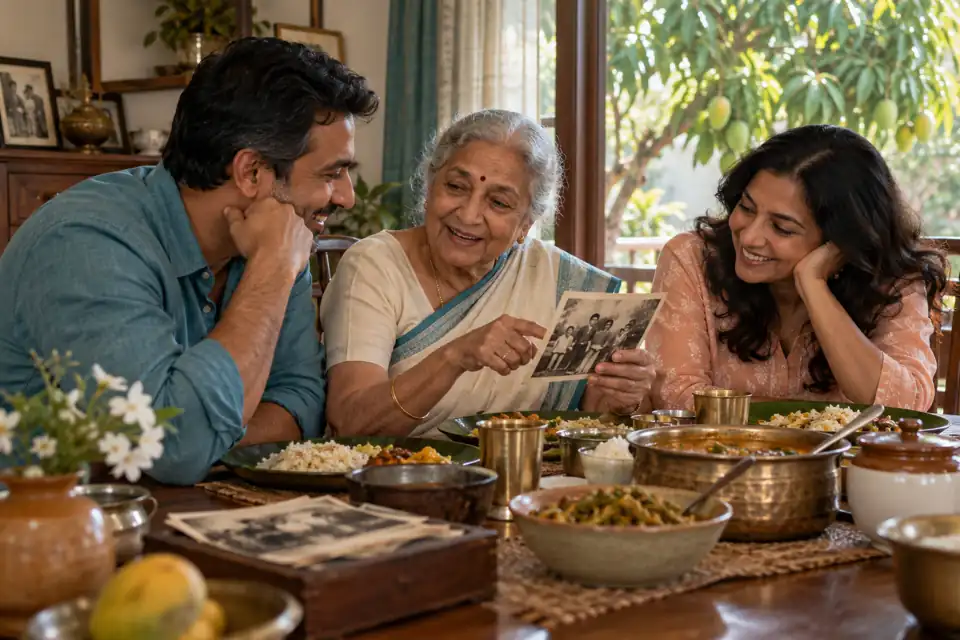
A family tree can show who is connected to whom, but it rarely explains what those people lived through. That is the difference between genealogy and family history: genealogy focuses on identifying relatives and documenting relationships, while family history brings names, records and memories together to describe people’s lives in context. Both matter when you want to understand where a family came from and what it carried forward.
You do not need to be a professional researcher to begin. A question, a few known relatives and a careful note-taking habit can turn scattered clues into a meaningful story. This guide shows how to build a reliable family tree, check sources, record family memories and shape your findings into a family history book that is useful to relatives across generations.
Genealogy maps relationships; family history explains lives
Genealogy asks questions such as: Who were this person’s parents? Where did they live? When did they marry or move? A family tree chart or family lineage chart makes these relationships visible. It is a framework, not the complete story. A chart may show that someone crossed a border or changed their surname, but it cannot tell you what the journey felt like or why that choice mattered.
Family history adds context. It connects a documented event to the work people did, the languages they spoke, the communities they joined, and the customs they passed along. A family history book may follow one branch, a place, a shared experience or several generations. Genealogy helps you organize the evidence; storytelling helps readers understand why the evidence matters.
Begin with one focused research question
Broad questions such as “Where did our family come from?” can feel too large. Begin with something answerable: Which town did a grandparent leave? What was a great-grandparent’s occupation? How did a family tradition begin? A specific question gives you a reason to review the documents and photographs you already have instead of collecting details without a plan.
Write down what you know, who told you, and how certain you are. Separate a confirmed date from a family recollection. If two relatives remember an event differently, keep both accounts until you can compare them. A family tree maker or a paper chart can help you see missing connections, but it should not pressure you to fill every blank. An honest unknown is more useful than a confident guess.
Collect records and preserve where each clue came from
Start with sources close to the family: birth, marriage and death certificates, passports, school records, letters, diaries, photographs, newspaper clippings, family Bibles, recipes and recorded interviews. Different records answer different questions. A certificate may establish a date; a letter may reveal how someone described a move; a photograph may help identify a workplace, uniform or gathering. No single source tells the whole story.
Keep a simple source log beside your notes. Record the document or person, the date you reviewed it, the detail it supports, and any uncertainty. If you make a digital copy, give it a descriptive file name and preserve the original where possible. This modest habit helps you distinguish evidence from interpretation when you later draft a family history narrative. It also helps another relative understand how a conclusion was reached.
Build a family tree that leaves room for real life
Begin with yourself and move back one generation at a time. Add only details you can support, and use a consistent way to record names, dates and places. When a name changes through marriage, migration, translation or spelling variation, note the form that appears in each source rather than silently replacing it. This makes future searches easier and prevents separate records from being mistaken for different people—or the reverse.
A family tree chart is a helpful overview, but keep space for notes about adoption, stepfamilies, guardianship, close friends who functioned as family, and relationships that do not fit a simple branch. Ask relatives how they describe the family connections. A respectful family tree book can acknowledge complexity without reducing people to boxes and lines. Our family tree maker guide offers more ideas for adding stories to a tree.
Make space for migration, language and local context
Families may have lived in several countries, regions or political boundaries during one lifetime. A place name in an old record may have changed, and a date may be written in a different order or calendar convention. If a record uses a spelling or term unfamiliar to your family today, preserve the original wording in your notes and explain it for readers. Do not assume that the family’s present-day nationality describes every earlier generation.
For families in the United States, Canada, the United Kingdom, Australia, India and elsewhere, record systems and available documents vary. Some relatives may have moved between rural and urban communities, crossed a national border, or spoken more than one language. Rather than forcing every clue into one standard, write down what the source actually says, note its origin, and distinguish a verified detail from a reasonable possibility. A little context can prevent a family story from flattening a complicated history.
Treat oral history as evidence with its own texture
Family memories add details that official records often leave out: what a home smelled like, which songs were played, how a meal was prepared, what a person was proud of, or what a move cost emotionally. Ask open questions and give the speaker time. “What do you remember about the first day?” often invites a fuller answer than “Was it difficult?” Record the speaker’s own words where permission is given, and label the account with who shared it and when.
A recollection is valuable even when a date is uncertain. You can write “she remembered it as being near the end of winter” rather than converting the memory into a precise month. If two accounts differ, show that difference kindly. A family history is not a courtroom verdict; it is a careful account of what records and people together help us understand.
Turn research into a readable family history book
Once you have a small body of reliable material, choose a shape for the story. You might organize chapters by generation, place, a family journey, a shared occupation, or a recurring theme such as care, migration, education or belonging. Avoid making the book a list of dates. Let each chapter answer a question and include a scene, a document or a remembered detail that makes the answer tangible.
Use the family tree as a guide for orientation, then explain relationships in the prose so readers are not forced to keep checking the chart. Briefly introduce a person, give the reader a sense of their setting, and connect the event to what followed. A life story book can include a family tree, short biographies, photographs with captions and a timeline, but each element should help the reader understand the people rather than simply decorate the pages.
Protect relatives while preserving the record
Research can uncover painful, private or unexpected information. Before sharing a living person’s story, ask for permission and consider whether identifying details are necessary. You can keep a private research file separate from the version intended for wider family. When a topic is sensitive, describe only what you can support and avoid presenting rumor as fact. Preserving family memories does not require publishing every detail.
Store copies in more than one safe place and tell a trusted relative how to find them. Add captions to photographs, retain the source log, and use clear folder names so the family’s research remains understandable after you are no longer maintaining it. A family history book can be revised as new records and voices come to light; it does not have to claim that the family story is finished forever.
Take the next step from what you already know
Choose one person or one branch. Write a short profile using three things you can verify and one memory shared by someone who knew them. Mark questions you cannot yet answer. Then decide whether to make a family tree chart, request a missing document, or invite a relative to talk. That sequence keeps research manageable while making space for both structure and feeling.
If the project is also becoming your own autobiography, our autobiography writing guide can help you move from family facts to the story of your own life. A family tree provides the connections; a thoughtful family history shows how people lived within them. When you preserve the evidence and listen carefully to memory, you give the next generation more than names—you give them a human account they can continue.