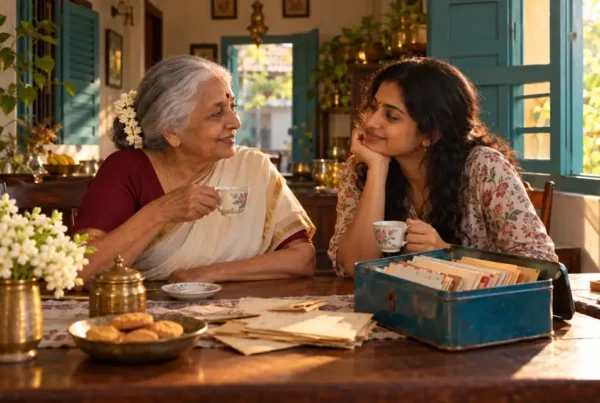


Memoir examples can make a large writing project feel possible. A page about one remembered afternoon may show how a writer can turn an ordinary detail into a scene with meaning. The point is not to copy another person’s childhood, family, or voice. It is to notice the choices that help a reader follow a true experience. Once you understand those choices, you can use them to shape your own life story, whether you are writing for yourself, for relatives, or for a wider audience.
A memoir is a focused account of lived experience. It may cover a season, relationship, question, place, or change rather than every year of a life. That makes it different from a full autobiography, though both forms can include reflection, family memories, and personal history. Strong memoir writing offers a reader a clear path through particular moments and helps them understand why those moments still matter.
Read for choices, not for facts to borrow
When you read an example, resist asking only, “What happened?” Ask, “How did the writer help me see it?” Notice where the story begins, how much background appears, when the narrator pauses to reflect, and what changes by the end. A memoir may describe a dramatic event, but the craft is usually in the selection and arrangement of details. You are studying how a story works, not looking for a life that resembles your own.
Six details to notice in memoir examples
1. The story’s boundaries
Look for the limits the writer has chosen. A memoir might follow a move between homes, a period of caregiving, a working life, or the slow repair of a relationship. Ask what is left outside the frame and why. Clear boundaries keep a life story from becoming a catalogue of every event. They also reassure the reader that the writer knows which question this book is trying to explore.
2. The opening scene
Many effective openings place the reader in a specific moment before explaining its importance. Notice the setting, action, and point of view. A scene may begin with a sound in a kitchen, a long wait at a station, or the first view of an unfamiliar street. The event does not need to be extraordinary. It needs enough concrete detail for the reader to understand where the narrator is and what they want.
3. The balance between scene and summary
A memoir cannot dramatize every day. Writers often slow down for moments that change a relationship or reveal a belief, then summarize the time between them. As you read, notice where the pace shifts. A quick paragraph may carry years; a longer scene may let a difficult conversation unfold. This contrast gives a reader both a sense of the wider personal history and time to feel the weight of an important moment.
4. The two perspectives of memory
Memoir often holds two selves on the page: the person who lived the moment and the person who remembers it now. Notice what the narrator understood then, what they understand today, and what remains unclear. Reflection adds meaning without pretending that every experience has a simple lesson. A brief pause can show how time changed the narrator’s view while preserving the uncertainty that belongs to real life.
5. The voice
The most convincing voice sounds like a person thinking carefully, not a character performing for approval. Writers may use humor, plain speech, pauses, or precise description. Ask whether the narrator sounds generous, guarded, curious, angry, or still unsure. You do not need to imitate that tone. Your voice grows from the words you would naturally use, the details you remember, and the distance you now have from the events.
6. The role of other people
A memoir is personal, but few lives are lived alone. Observe how the writer introduces relatives, friends, teachers, or colleagues. Does the person appear through an action or a conversation rather than a long description? Does the narrator distinguish what they remember from what someone later told them? These choices create context while respecting the fact that another person may remember the same event differently.
A practical exercise for using examples
Choose one memoir example that interests you. After reading a short section, close the book and write three notes: what happened, what you felt as a reader, and what the writer did to create that response. Keep the notes about craft. For example, you might notice that the scene begins with an object, that the narrator delays an explanation, or that a later reflection changes how the opening feels.
Now choose a memory of your own that carries a related kind of feeling, not necessarily the same event. It might be a moment of belonging, embarrassment, worry, relief, or surprise. Write for ten minutes about what you saw, heard, carried, or wanted. Do not begin by explaining the lesson. Let the scene exist on the page first. If the memory is incomplete, write only what you can honestly recall and mark questions for later rather than filling gaps with guesses.
After a break, add a few sentences from your present perspective. What do you know now that you did not know then? What do you still wonder about? This simple movement between scene and reflection can help you find a promising thread for a memoir outline. Repeat the exercise with several moments. Patterns may emerge around family, work, place, change, or the meaning of home. Let those patterns suggest a direction instead of forcing them into a theme too soon.
Let the form fit the story you want to tell
If you want to record a wide chronology, an autobiography may suit your purpose better than a narrow memoir. If you are telling another person’s life, you are moving toward biography writing and should gather information with care. Some projects are family history books built from several voices, documents, and photographs. Each form asks for a different balance of scope, research, and reflection. Reading examples can help you recognize the form that feels honest and manageable.
A family tree can show connections, but it cannot explain what a relationship felt like or why a tradition mattered. Oral history conversations, letters, photographs, and family memories can provide context, but sources should be labeled clearly. A digital memoir or digital autobiography may preserve audio, scanned documents, and writing together. Keep copies in a safe place and note when a detail comes from a record, another person, or your own recollection.
When you want help finding a central thread, try this guide to choosing a memoir theme. It offers a practical way to move from a collection of memories toward a focused story without requiring you to include every event.
Write other people into the story with care
Before including a relative’s private experience, ask why it belongs in your memoir and whether the reader needs that detail. Consider permission when appropriate, especially for material that is sensitive or not already public. If accounts differ, avoid presenting one memory as unquestionable fact. You can say what you remember, explain what you later learned, and leave room for uncertainty. A thoughtful memoir can be honest without exposing every private detail in a family’s history.
Start small and revise for clarity
A short routine is more useful than waiting for a perfect opening. Set a modest goal: one scene, one voice recording, or one page of notes. Add dates and places when you know them, but do not let missing details stop you from drafting. Keep a separate list of facts to check. If you use a photograph or letter to prompt memory, write down what the item shows and what it cannot prove. This keeps research distinct from recollection.
When you revise, imagine a reader who does not know your family. Add context for names, places, and customs that the reader needs. Remove repeated explanations and preserve the details that make a moment specific. Read the work aloud to hear where the voice feels natural or where the story moves too quickly. If you need outside support, a writing group, editor, or memoir writing service may help with structure. Decide in advance which choices remain yours, including final wording, privacy, and approval.
Let examples help you begin, then return to your own memory
The best memoir examples are not blueprints to follow. They are reminders that a meaningful story can begin with one bounded moment, a clear point of view, and a willingness to reflect. Study how a writer selects scenes, balances past and present, and treats other people. Then close the book and write a scene only you can tell. For more guidance, browse the Life Story, Memoir & Legacy collection. Your first draft can be simple. Its value begins with the care you give to remembering accurately and choosing what to share.